Lockouts · Barrie
Break-In Damage Lock Repair
There is a hole where the cylinder used to be.
In plain words
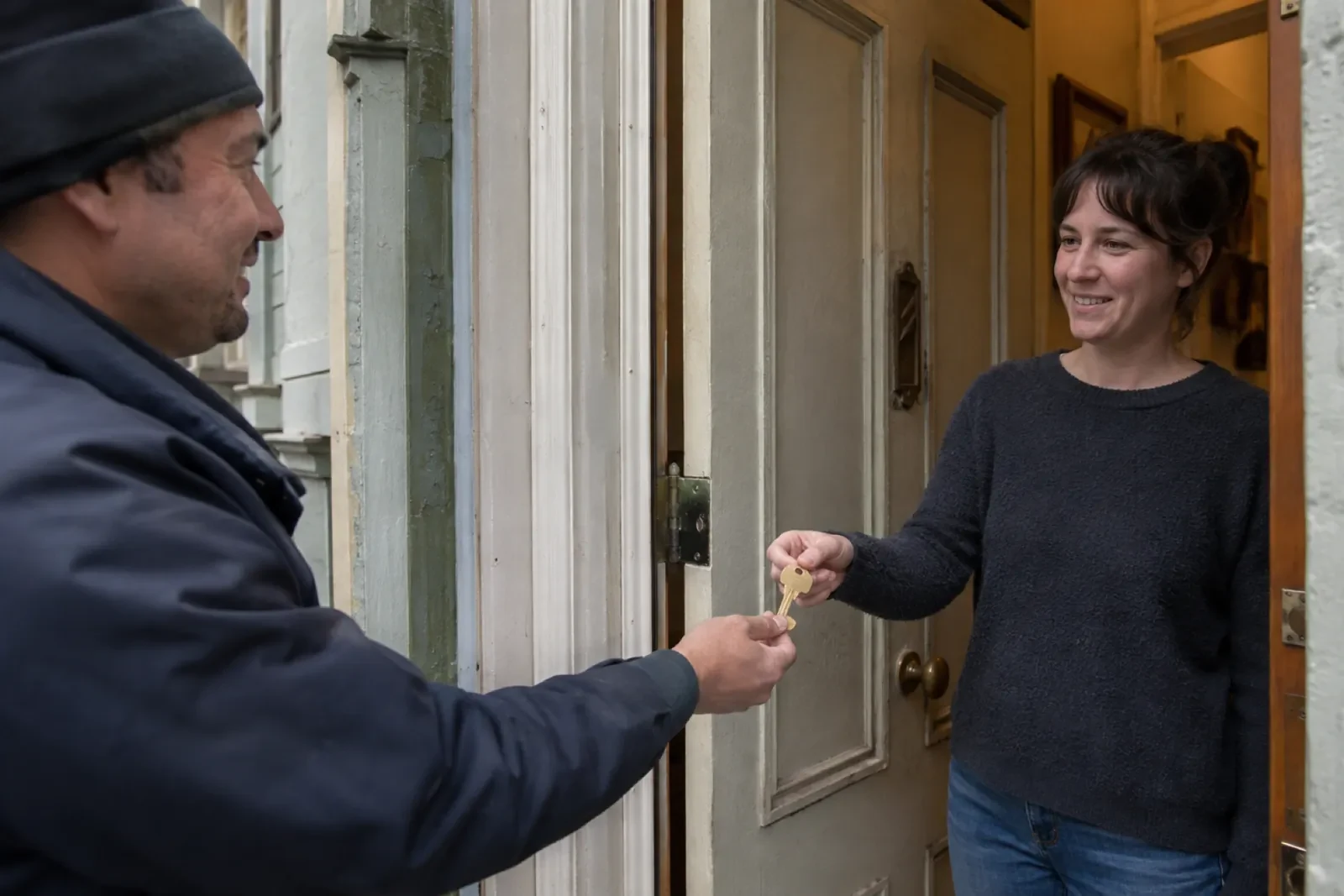
In a rental or condo the repair involves more than one set of hands. A tenant reports the break-in to the landlord or property manager, who normally arranges the work, because landlords are responsible for repairs and both sides have rules about changing locks and sharing keys. The locksmith secures the door on an authorized instruction, keeps the suite door openable from inside, uses hardware suited to a fire-rated corridor door where that applies, and leaves a clear note of what was done so keys can be handed over properly. Tenants and owners each end up with a working, lockable door and a record they can pass along.
How the visit goesThe shop's aluminum door has a bent meeting stile and the hookbolt is jammed half out. The alarm did its job and the display is untouched, but the entrance will not close properly and opening time is hours away.
Break-In Damage Lock Repair
How the visit goes
How the door was attacked
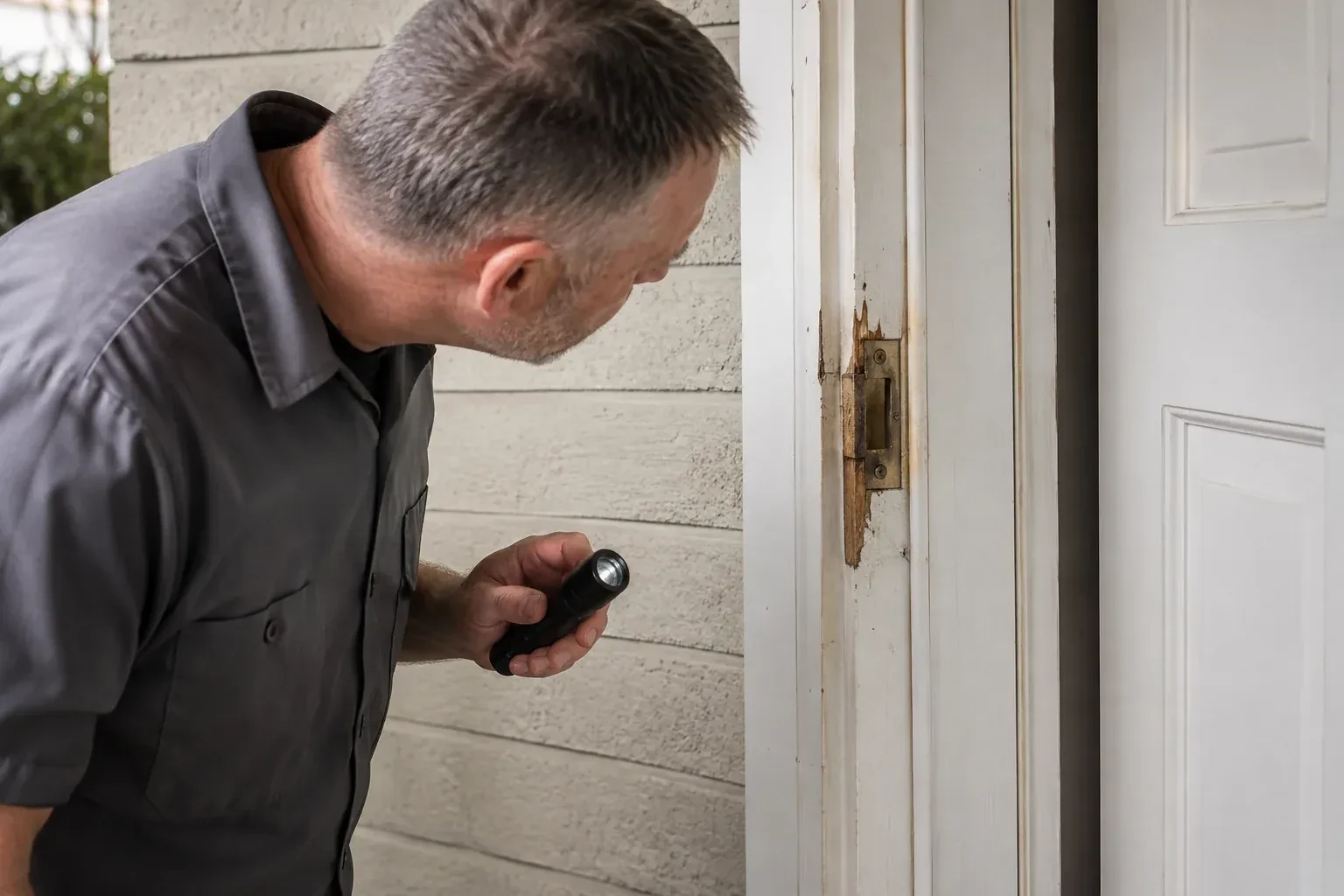
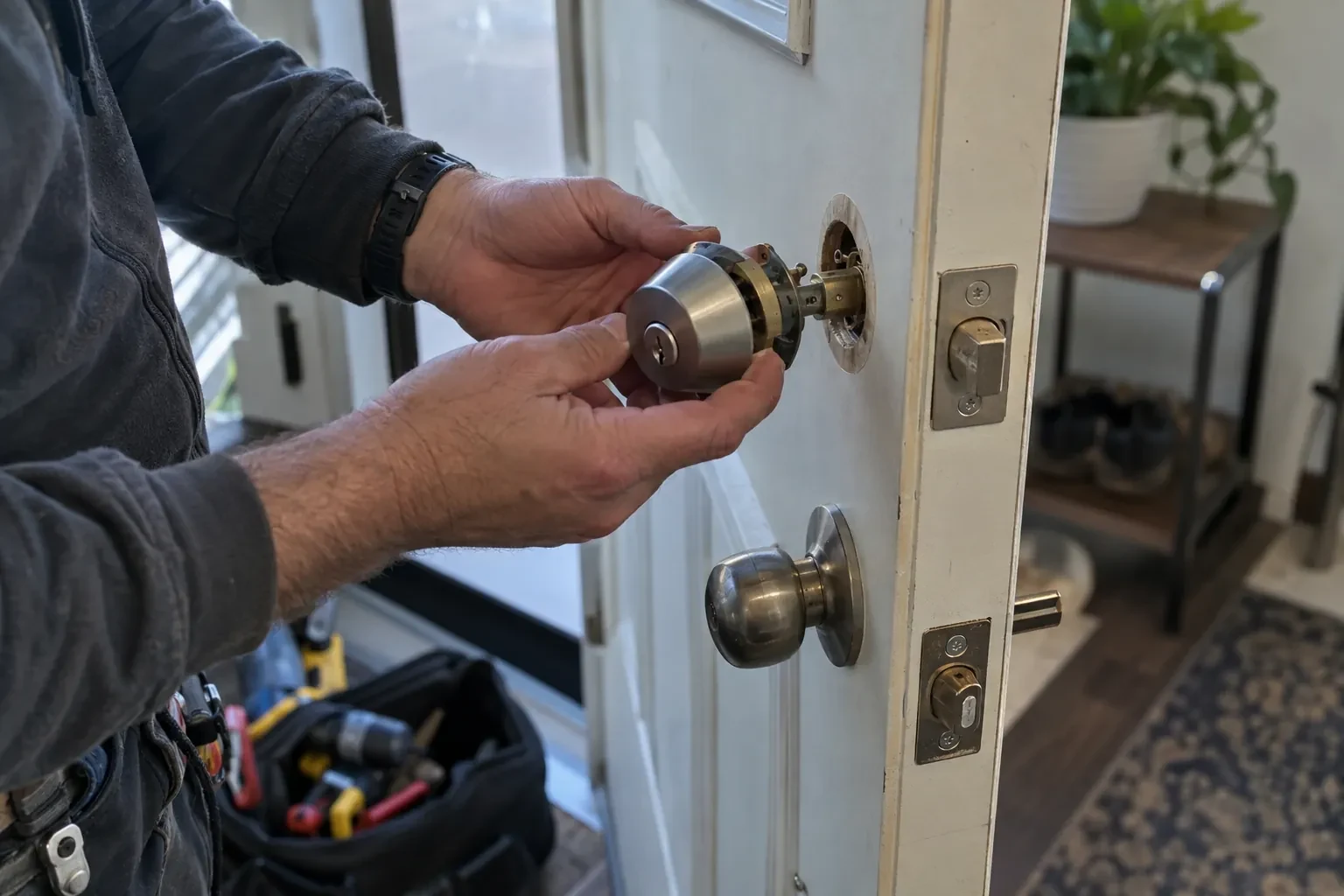
The damage tells the story of the attack, and the story decides the repair. A kick leaves the strike torn out and the jamb split along the grain, often with the deadbolt still thrown and intact. A pry bar leaves a crushed door edge, a bent latch and marks in the weatherstrip gap. A wrench attack twists the cylinder out of its housing and may shear the tailpiece, leaving a bolt stuck in the frame. Broken glass beside the door means the lock was never defeated at all; an arm simply reached the thumb-turn. Each pattern points to a different weak point, so identifying it first keeps the repair aimed at what actually gave way.
Sliding doors and garage entries
A forced patio slider is repaired by putting the panel back on its track, replacing the broken latch or fitting an auxiliary bolt into the frame, and adding the pieces that stop the next attempt: anti-lift blocks in the upper channel so the panel cannot be raised off its rollers, and a foot bolt or pin lock at the bottom. A garage man-door that carried only a knob lock gets a proper deadbolt, a boxed strike and long hinge screws to match the front of the house. Where an overhead door was the way in, the emergency release cord is shielded from outside reach and the opener remotes are reprogrammed.
A record for police and the adjuster
You are left with a plain written account: which opening was forced, what was found damaged, what was replaced, what was reinforced and with what, which locks were rekeyed and how many keys were cut, and what remains for another trade. The photographs taken before work began sit alongside it. The broken hardware is bagged for the adjuster unless you say otherwise, and the receipt for the securing visit goes in the same folder, since insurers ask policyholders to keep damaged property and receipts. Together these turn a stressful evening into a claim file that answers questions before they are asked.
Break-In Damage Lock Repair
In the van
Rekeying pins and key blanks
Replacement cylinder or core
Two-part wood epoxy and shims
Security strike box
Jamb repair plate
Break-In Damage Lock Repair
What affects the quote
Method of jamb repair
Bonding a split with epoxy and a repair plate is one line; fitting a new section of wood is another; a full jamb leg through a carpenter is quoted by that trade.
Commercial and storefront hardware
Narrow-stile deadbolts, hookbolts, latch guards, anti-pry astragals and interchangeable cores are commercial parts with commercial fitting time, and a shop's quote reflects them.
Sliding door hardware
Putting a slider back on its track, replacing its latch and adding anti-lift blocks, a foot bolt or an auxiliary lock is a different parts list from a hinged door, and is quoted as such.
What to have ready
- Do you own the property, rent it or manage it for someone else?
- Is everyone safe, and is the property clear of anyone who should not be there?
- Were any keys, garage remotes or alarm codes taken?
Break-In Damage Lock Repair: questions
QuestionsWill my insurer want to see the damage before it is repaired?
Insurers ask policyholders to document the loss, keep damaged property and hold on to receipts, and a securing visit is expected rather than discouraged, because an open door invites more loss. Photograph everything as found, keep the broken hardware in a bag, keep the invoice, and call your insurer as soon as the house is safe. The adjuster can see the old parts and the photos; the door itself need not stay open.
Should I upgrade to a stronger deadbolt while you are here?
It is the natural moment, because the door is already open for repair. A deadbolt with a full one-inch throw, a hardened insert against sawing and a low-profile face that resists a wrench grip, graded to a recognised durability standard, takes little extra effort to fit now compared with a return visit. Pair it with the reinforced strike and long screws and the door becomes hard to attack from any side. The choice is yours; the locksmith shows the options and lets you decide.
Should I call the police before the locksmith?
Yes. Call the emergency number if there is any chance the intruder is still there, and the non-emergency line of your local police service otherwise. A break and enter is reported by phone rather than through the online forms used for minor property damage. Ask for the occurrence number, since your insurer will want it. Once the police have released the scene, or told you they are not attending, the locksmith can begin.
Related services
- Business Lockout ServiceYou signed the lease on the unit last week and the landlord handed over possession, but the previous tenant's locks are still on both doors and no keys came with them.
- Broken Key ExtractionThe padlock on the shed has been stiff all summer.
- Seized & Jammed Lock OpeningYou are inside, the deadbolt is thrown, and the thumb-turn will not budge.