Change or rekey · Barrie
Lock Replacement & Upgrade
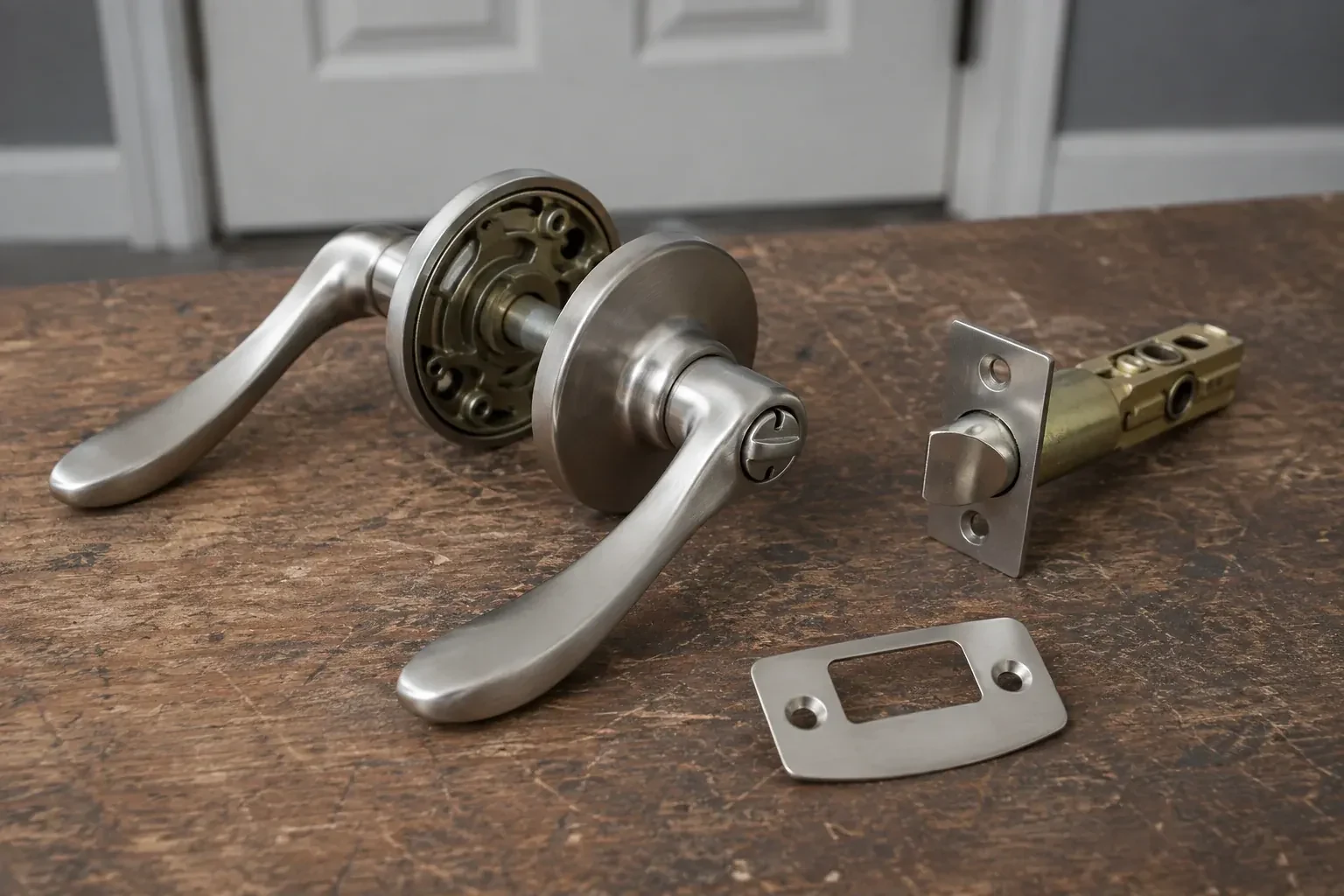
The house is fifteen years old and every exterior door still wears the light hardware the builder fitted: a short bolt, a thin strike held by two small screws, and a knob lock that never suited a street entrance.
In plain words
A replacement lock has to fit holes that already exist, and that is where the visit begins. The locksmith measures the backset, the distance from the door edge to the centre of the bore, which on most doors is 60 or 70 millimetres, checks the cross-bore diameter and edge-bore size, notes door thickness and handing, and looks at the strike cut-out. Most residential hardware is made to these standard preparations, so the new lock usually drops into place with no new drilling. Where a mortise lock or a thick door departs from the norm, filler plates, extension kits or a careful new bore bring the door up to standard.
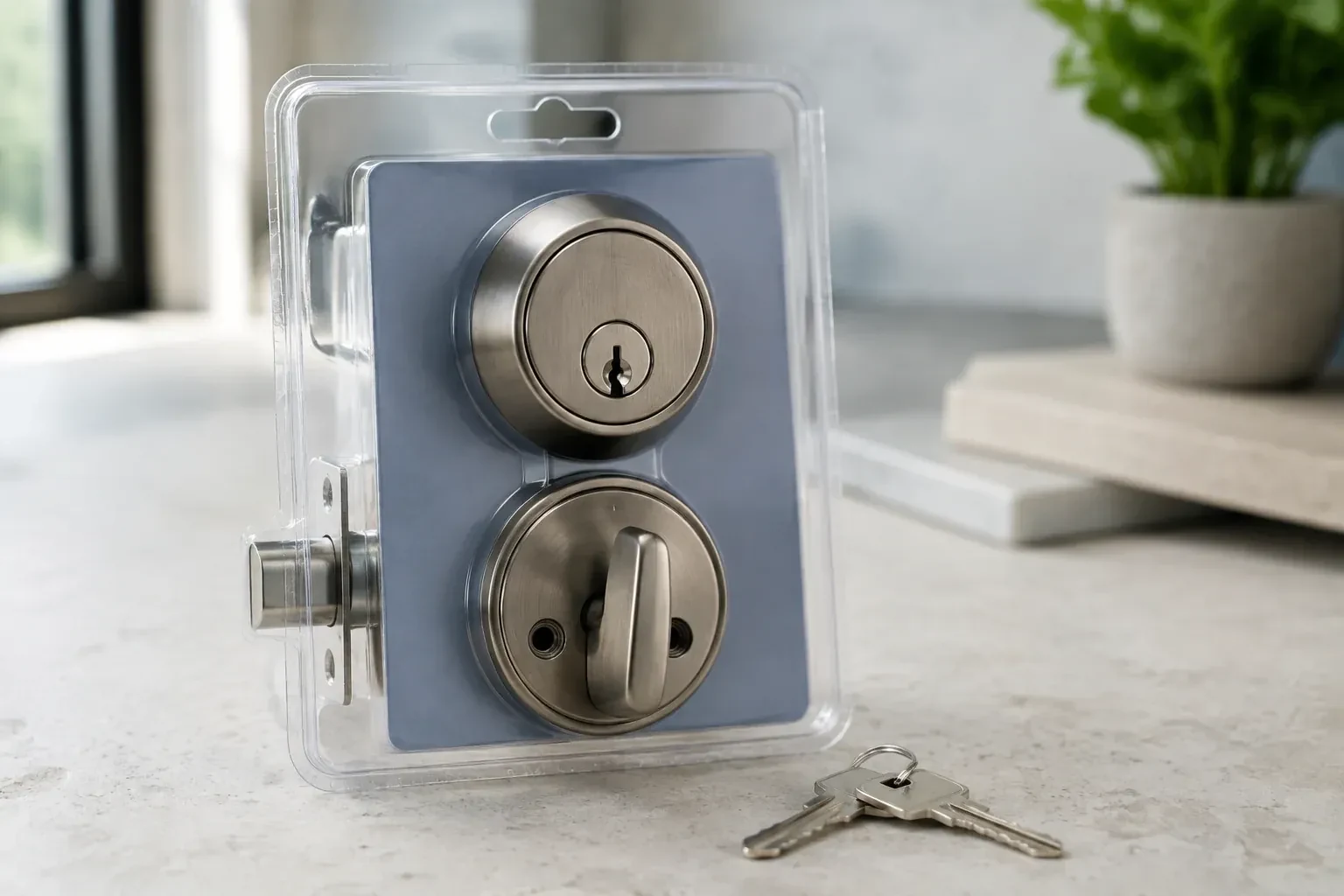
How the visit goesThree teenagers, a dog walker, a cleaner and one house key that keeps going missing. You are tired of cutting copies and would rather give each person a code you can switch off, with a proper deadbolt behind it.
Lock Replacement & Upgrade
How the visit goes
Who is asking for the change
The first check is about the person, not the door. An owner can change any lock on their home. A tenant who wants new hardware on the unit door needs the landlord's agreement, and a landlord who changes a lock while a tenant lives there hands over new keys. The locksmith asks which situation applies and, where paperwork helps, looks at identification, a deed, a lease or a property-management note. It takes a minute and it means the new lock goes on with everyone who has a stake in the door knowing about it, which is exactly how a lock should start its working life.
Mounting the cylinder and the interior side
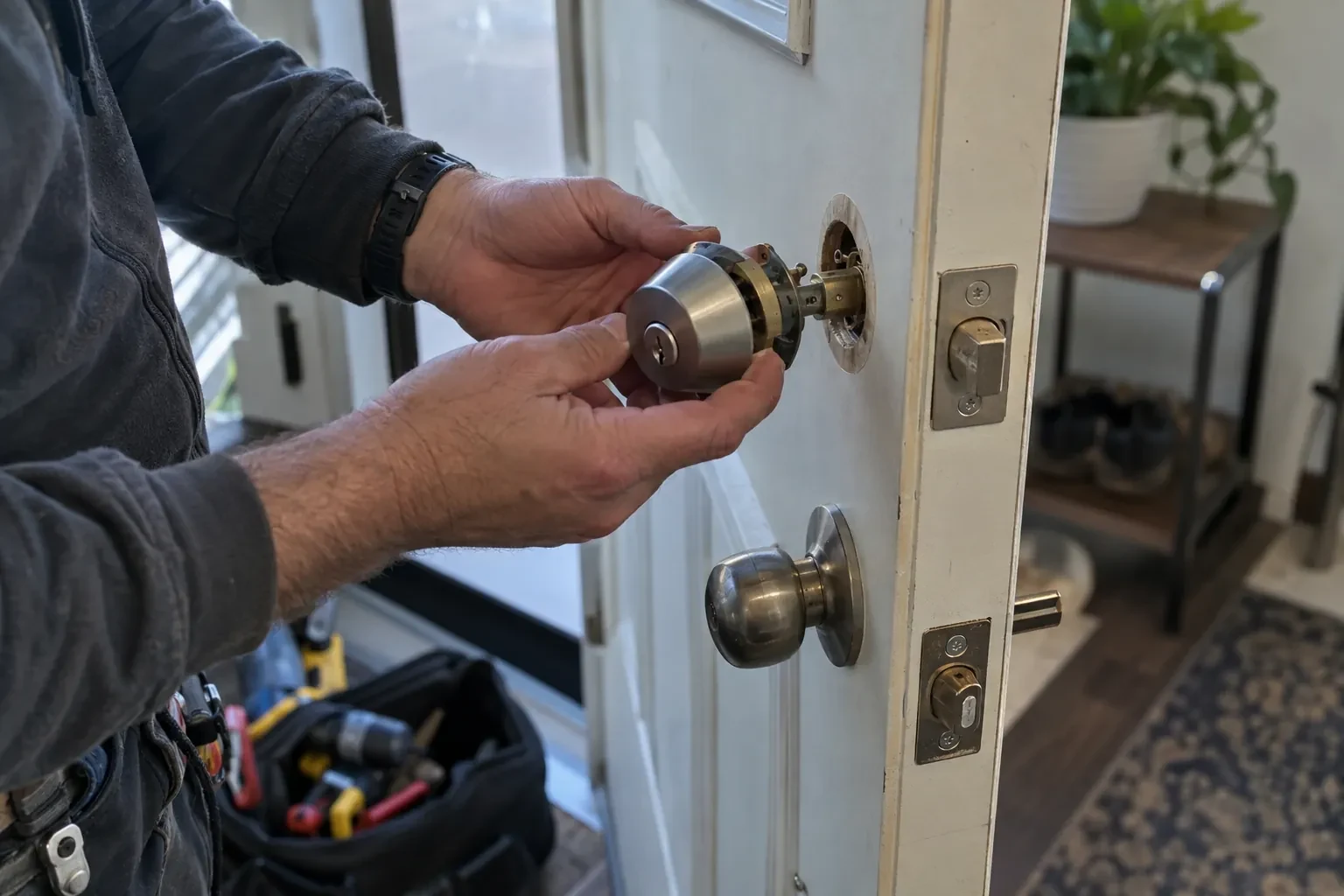
The exterior housing goes on with its tailpiece passing through the slot in the bolt, oriented as the maker specifies so the keyway sits upright. The interior thumb-turn or rose is offered up and the two long mounting screws are drawn down evenly by hand until firm, not crushed; zinc housings distort and threads strip under a drill, and an over-tight rose makes a lever heavy forever. On thick doors, extension kits bring screws and spindle to length. A knob or lever set adds the latch spindle and the spring cage, and the handle is checked to return crisply to level before the trim is snugged.
Keys counted, named and planned
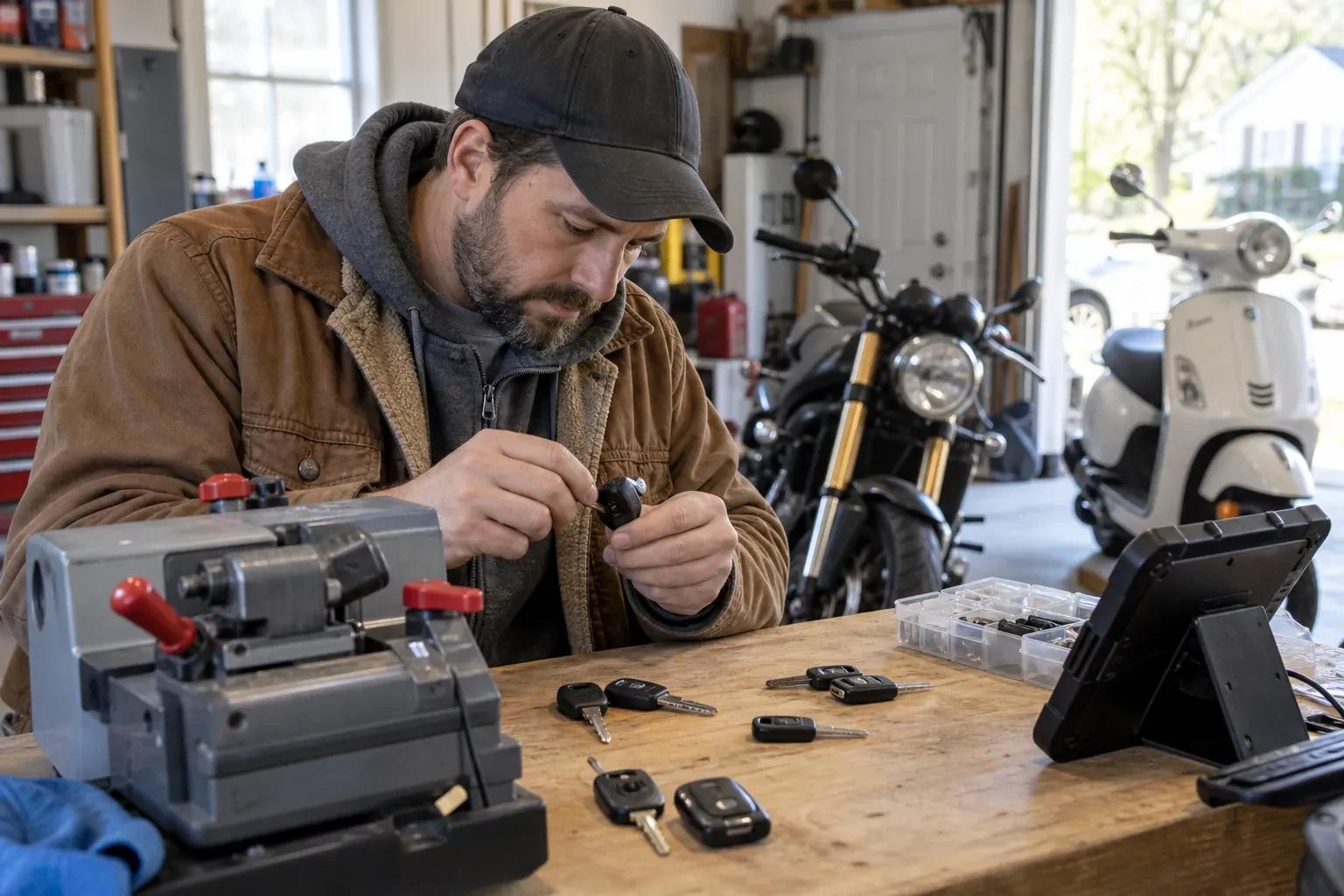
You receive the agreed number of keys, cut from the new pinning and tried in every door they should open, plus any code cards for a restricted system, which are what future copies are cut from. It is worth deciding on the spot who gets one and where the spare lives, ideally with a trusted neighbour or in a lockbox rather than in a drawer inside. If the house is now on a single key, retire every old key so none can be confused with the new one. A written list of which key does what goes in the home file.
Lock Replacement & Upgrade
In the van
Key blanks and key cutter
Knob or lever entry set
Boring jig and hole saws
Manufacturer-approved cylinder lubricant
75 millimetre strike and hinge screws
Lock Replacement & Upgrade
What affects the quote
Keys cut
Each key is counted, and restricted keys cut against a card are a different item from standard blanks. Say how many people need one and the quote lists them.
Older and mortise hardware
Servicing an original mortise case, sourcing a compatible cylinder or fitting a conversion plate on a century door involves more assessment and fitting time than a standard cylindrical replacement.
Changes to the door preparation
Adjusting a strike mortise is minor; boring a new hole for a deadbolt, fitting a filler plate over an old mortise pocket or adapting a thick door with extension kits is quoted as its own item.
What to have ready
- Has the door been forced or damaged, or does it need a push to lock?
- Do you own the home, or rent it with the landlord's agreement to change locks?
- Is there a sliding patio door or French door to include?
Lock Replacement & Upgrade: questions
QuestionsWhat information helps before the visit?
Photographs of each lock from outside and inside, plus one of the door edge showing the latch plate and one of the strike on the frame, tell the locksmith most of what they need. Add the door thickness if you can measure it, whether the door is wood, steel or fibreglass, the finish you want to match, how many doors are involved and whether you want them all on one key.
Is there anything different about steel or fibreglass doors?
The lock hardware is the same; the door construction changes the method. Steel and fibreglass doors have a wooden or composite block inside the lock stile, and existing bores are used wherever possible. Where a new deadbolt must be added, the locksmith drills with a jig and bits suited to the skin so the hole is clean and square, and fits an edge plate designed for that door. Insulated doors also move less with humidity, so alignment tends to hold well.
What is a reinforced strike, and is it worth adding?
A standard strike is a thin plate held by two short screws in the jamb, and the jamb is what splits when a door is forced. A reinforced strike or strike box is heavier and is fixed with long screws that pass through the jamb into the framing, spreading the load into the structure. It is one of the most effective upgrades on any exterior door and is usually fitted as part of a deadbolt replacement.
Related services
- Deadbolt InstallationThe old deadbolt has grown lazy.
- Vintage Mortise Lock ServiceThe key turns freely in the round cylinder on the door, all the way around and back, without the bolt shifting at all.
- Smart Lock InstallationThe kids get home before you do and the spare key has been lost twice this school year.