Locksmith in Barrie, OntarioExit doors, closers,and hardware that lasts
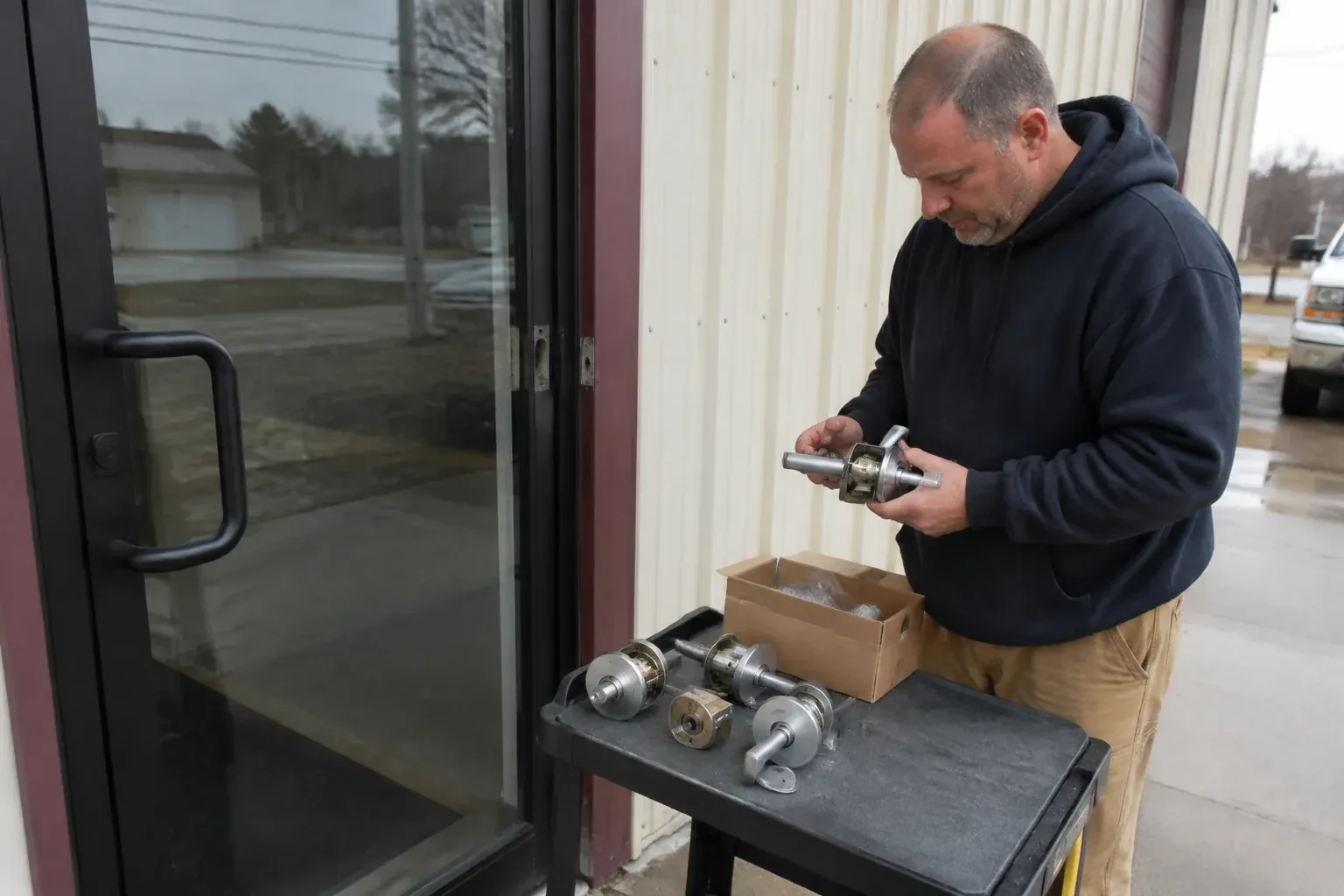
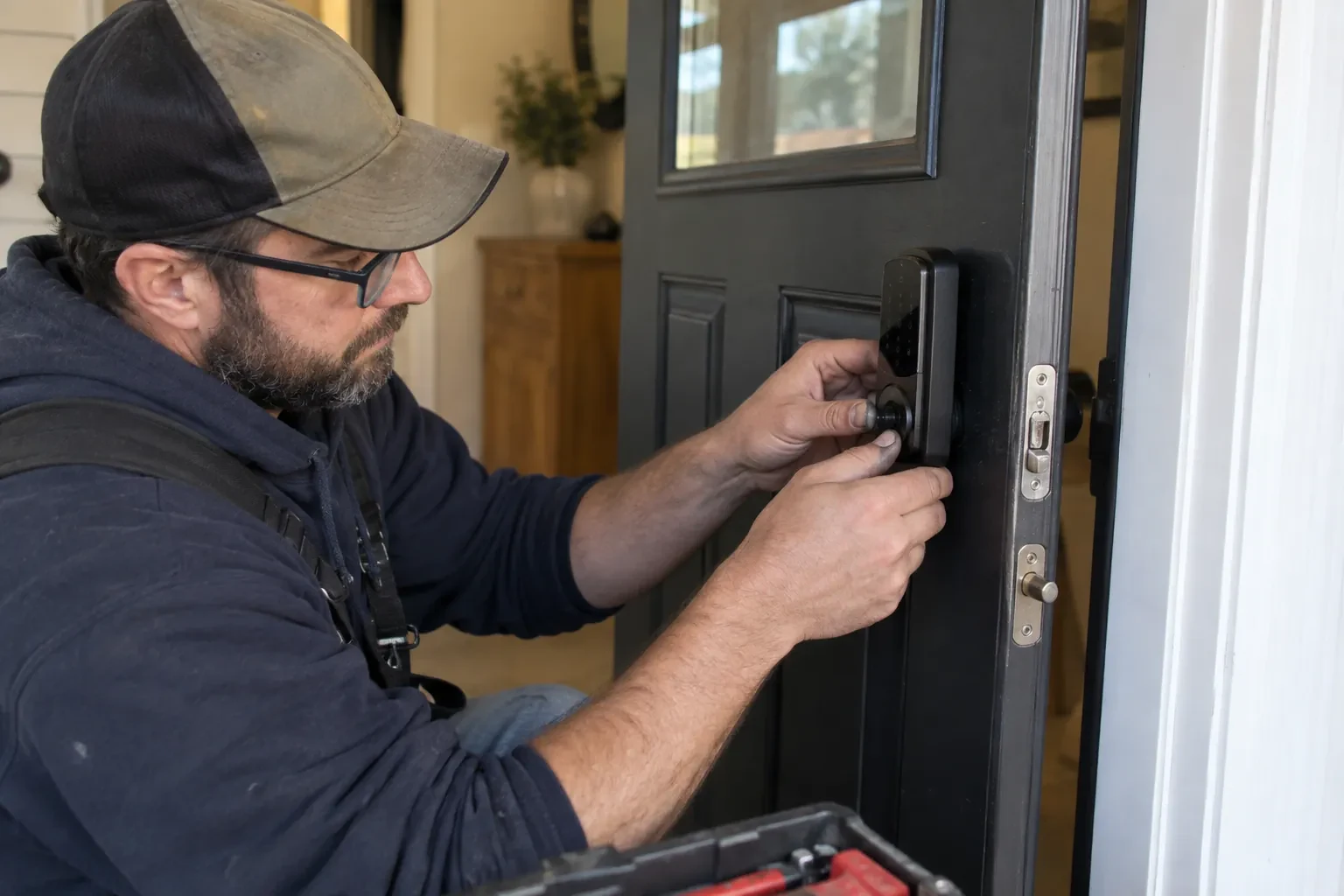
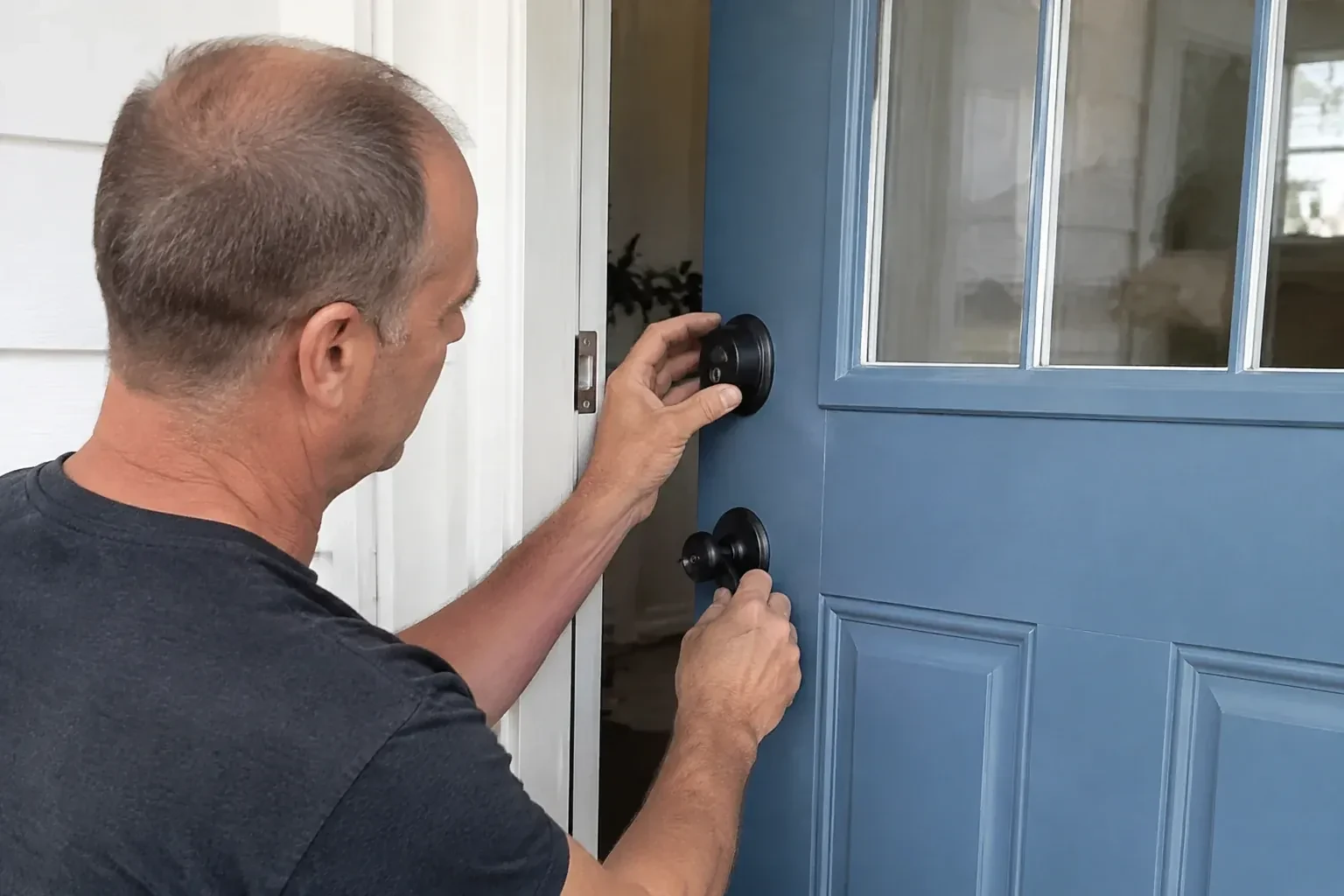
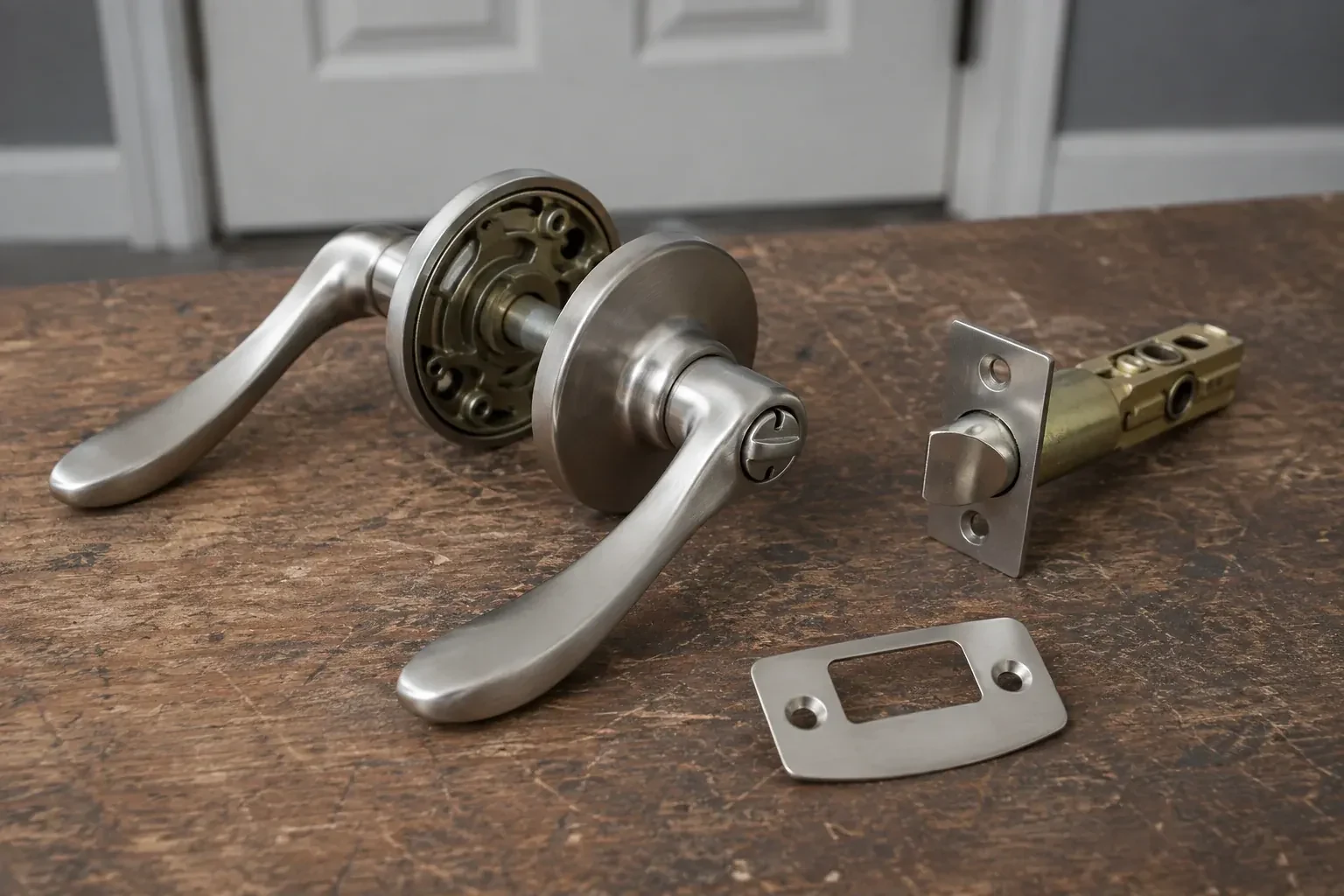
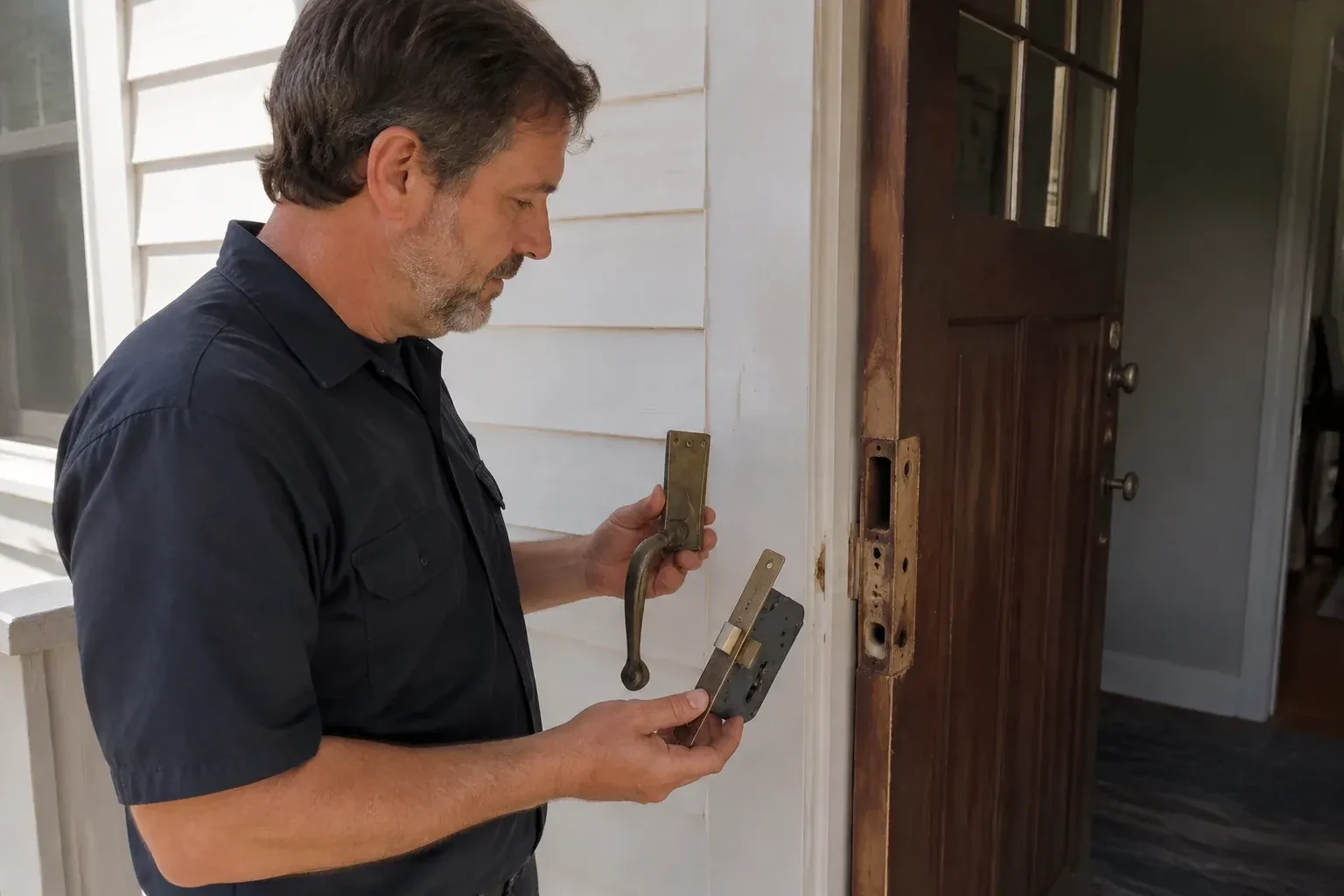
Commercial doors in Barrie take a beating: hundreds of openings a day, deliveries, weather, the odd kick. We fit lever sets, closers, push bars and deadlatches built for that traffic, adjust them so the door shuts and latches on its own, and come back to service them before they fail.
Commercial doors in Barrie take a beating: hundreds of openings a day, deliveries, weather, the odd kick. We fit lever sets, closers, push bars and deadlatches built for that traffic, adjust them so the door shuts and latches on its own, and come back to service them before they fail.
From lockouts to master keys.
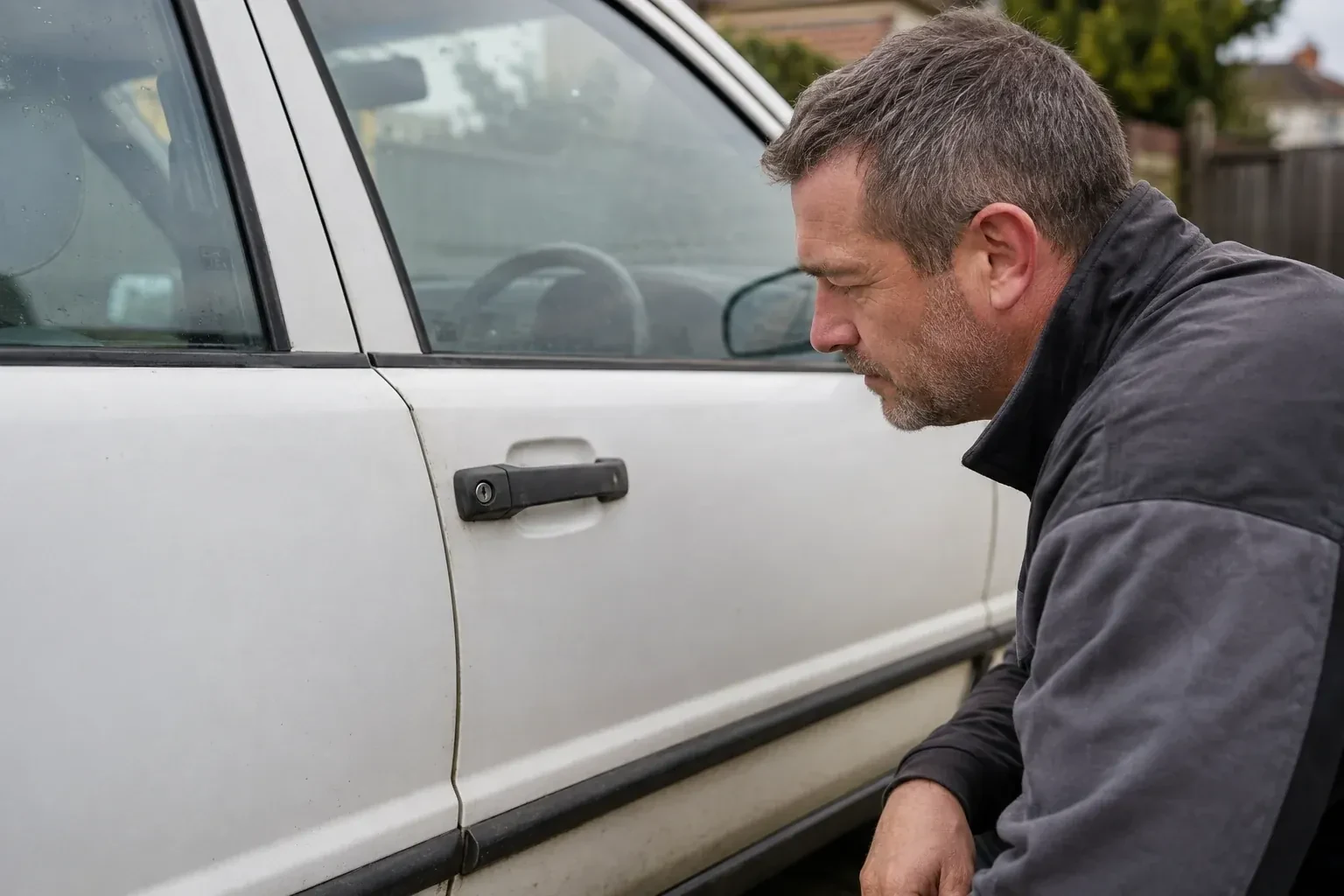
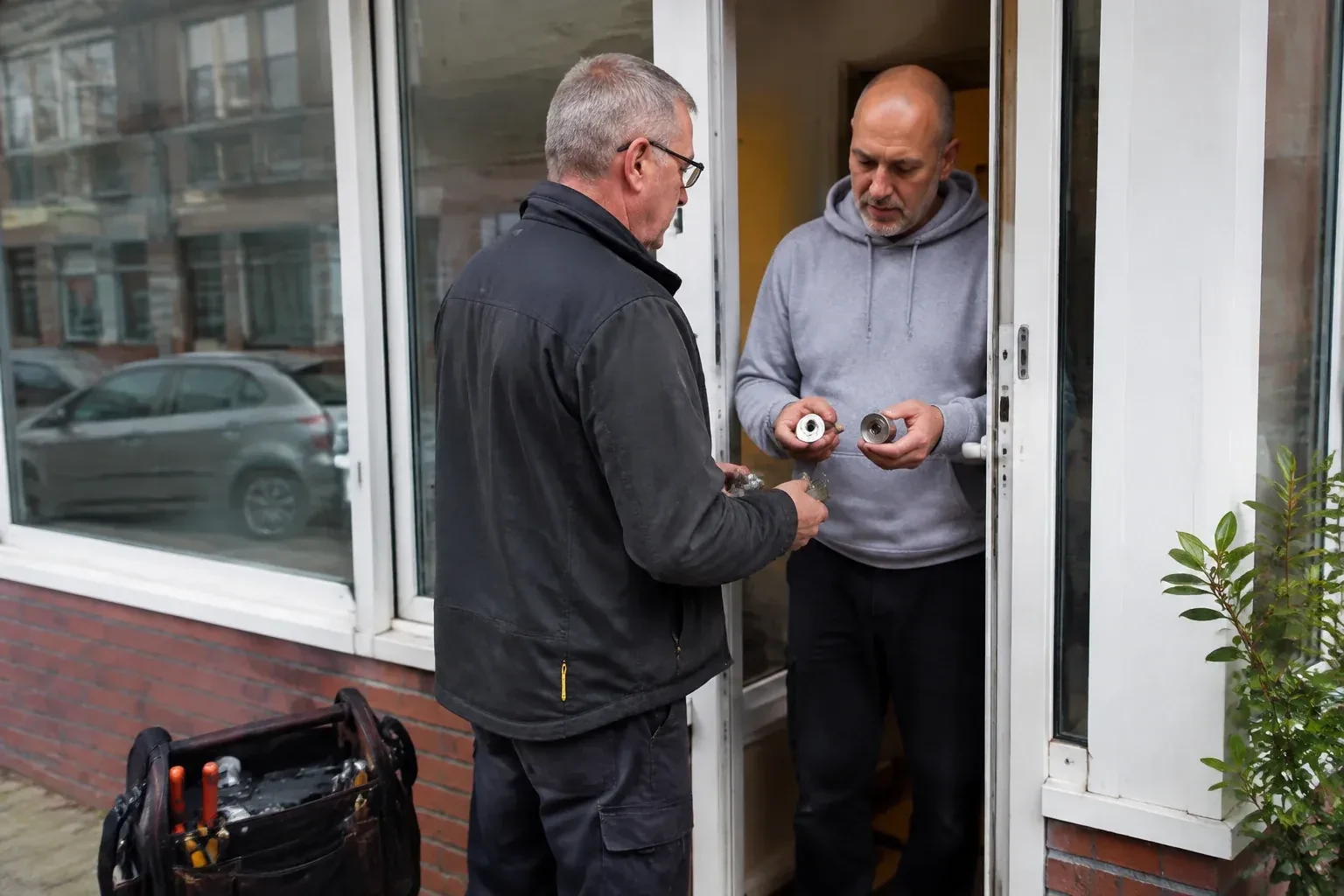
Every job in Barrie starts with a proper look before anyone touches a tool. The locksmith checks the cylinder, the latch, the strike and the way the door sits in its frame, then tells you what he found and what he suggests. The price is given at the door once that look is done, so it reflects the actual hardware rather than a guess, and it is the same fee at any hour.
Tenants and landlords in Barrie both call us about locks, and the good practice is the same: the owner agrees to changes, the keys are accounted for and the hardware stays in good order. We help with rekeying at turnover, replacing worn locks and adding a thumb-turn inside so everyone can leave without hunting for a key.
34years in business
24/7open every day
Explained before any tool comes out. You will hear what we found, what we suggest and why, before anything is changed. If you want a minute to think, take it.
Choices, not a single answer. Most problems have more than one fix. We lay out the practical options and the trade-offs, then let you choose the one that fits your home and budget.
A tidy doorstep. Shavings swept, packaging taken away, the old hardware offered to you or disposed of. The only sign we were there is a lock that works.
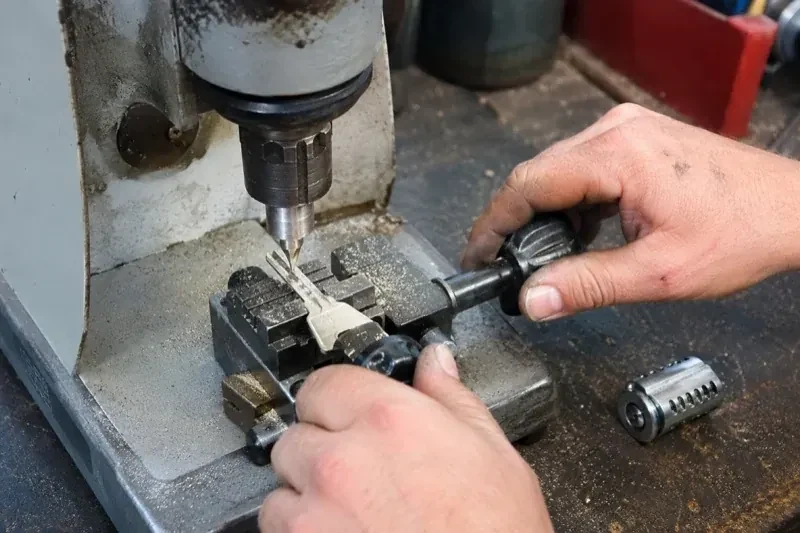
These are the services we bring to doors across Barrie. Residential work covers lockouts, rekeying, lock replacement, deadbolts, smart locks and older hardware brought back to life. Commercial work covers storefront doors, exit devices, closers, master keys and safes. Vehicle key cutting rounds out the list when it is needed.
About 29% of homes in Barrie were built in 1980 or earlier, according to the 2021 Census.
Newer homes
Where most homes are recent, the doors themselves are sound and the work is mostly about keys and control: who holds them, whether contractor keys were retired, and whether one key can open everything. The visit is often more conversation than drilling.
Single-detached houses make up about 58% of homes in Barrie (2021 Census).
Where housing is mixed, the same street can hold a solid wood front door, a steel townhouse door and a metal-clad suite door. A locksmith fits each with hardware suited to its construction, so every neighbour ends up with a door that locks properly.
A lock's rating comes down to how long it holds against a skilled attacker with tools. Doors are only as good as their frames. High security work respects both facts, hardening the cylinder and the assembly around it at the same time.
The house is fifteen years old and every exterior door still wears the light hardware the builder fitted: a short bolt, a thin strike held by two small screws, and a knob lock that never suited a street entrance.
Pry marks circle the dial after an overnight break-in attempt, and the safe now refuses every number that used to open it, as if something inside has locked itself down.
The till drawer has been holding two days of cash because the new shop never got a proper safe, and a locked drawer under the counter is the only thing standing between that cash and anyone who works late.
WhyThe first useful move after losing a key is to think about where it worked rather than where it went.
The builder handed over your new home with a stack of identical keys, and you know the framing crew, the painters and the flooring installers all used a construction key during the build.
WhyWhat you keep after rekeying is almost everything.
The key still turns, but lately it spins a half-circle further than it used to before the little door lets go, and some mornings it takes a second try.
WhyNot every mailbox in front of a house belongs to the person collecting from it, and this service is scoped around that distinction.
The keypad on the office safe blinks a low-battery warning every morning now, and whoever notices it first quietly hopes someone else deals with it before the batteries finally give out mid-week.
WhyBusinesses call for this service for two different reasons that sometimes overlap: protecting cash held overnight, and protecting paper records that would be enormously slow to recreate.
The team has grown past the point where one shared key still makes sense.
WhyAn exit door does not stop being an exit once it is wired into an access control system.
The kitchen delivery door gets shouldered open more than a hundred times a shift, and lately the latch slips past the strike plate instead of catching it on the first push.
WhyCommercial-grade lock replacement swaps hardware that is worn, damaged, mismatched or simply not rated for a business door with hardware built for that duty: a mortise lock body, a heavy cylindrical lockset, or a narrow-stile lock or hookbolt for an aluminum storefront door.
The engine cranks, catches for a second and dies, and a small key-shaped light keeps blinking on the dash.
WhyA used vehicle sometimes arrives with a lock or two that never quite matched the rest, whether from a prior repair, a replaced door, or a key cut from a worn original.
How a visit goes
Describe the property, the hardware and what has changed, and the visit starts from what you have seen.
1
2
3
01
Identifying the small lock
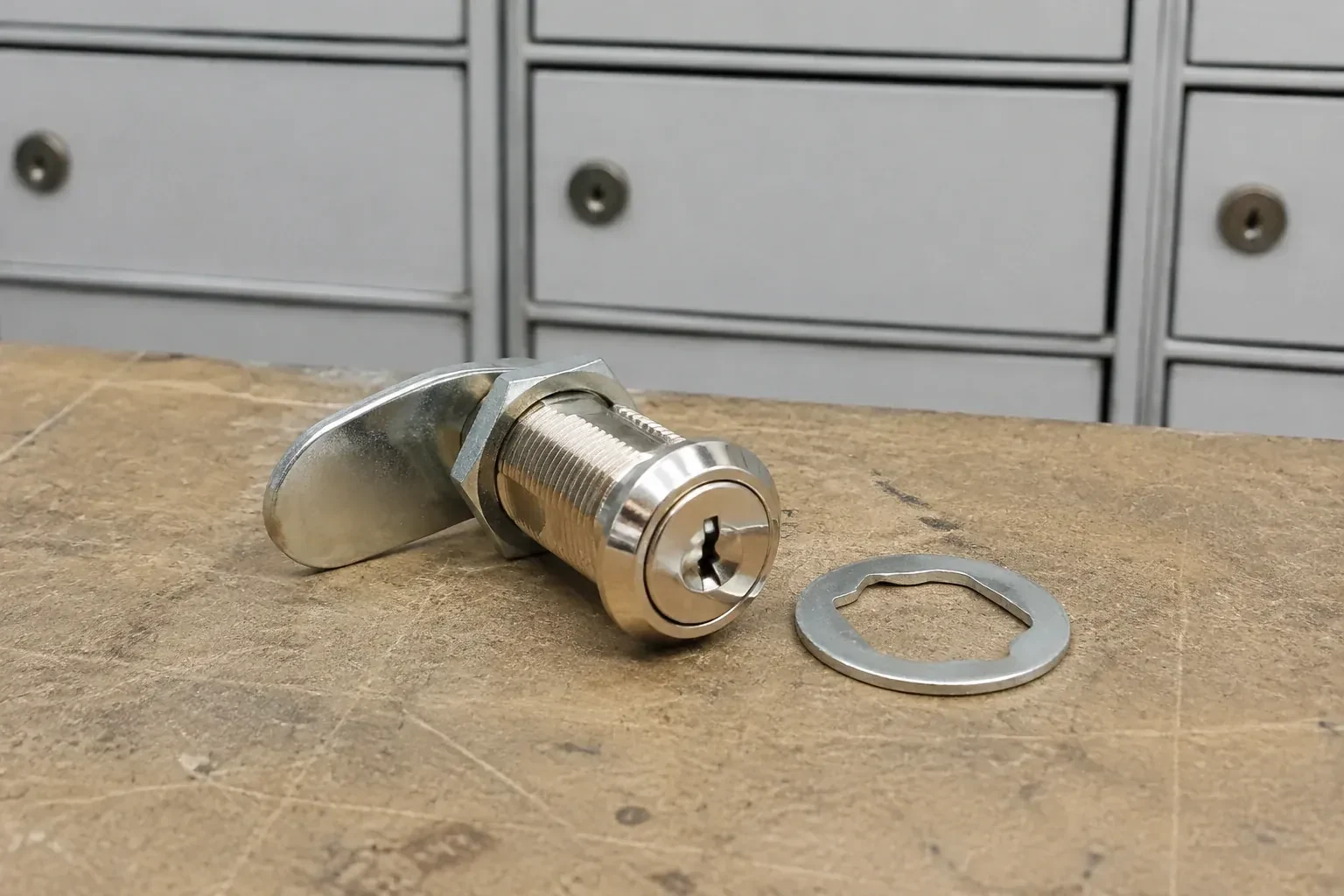
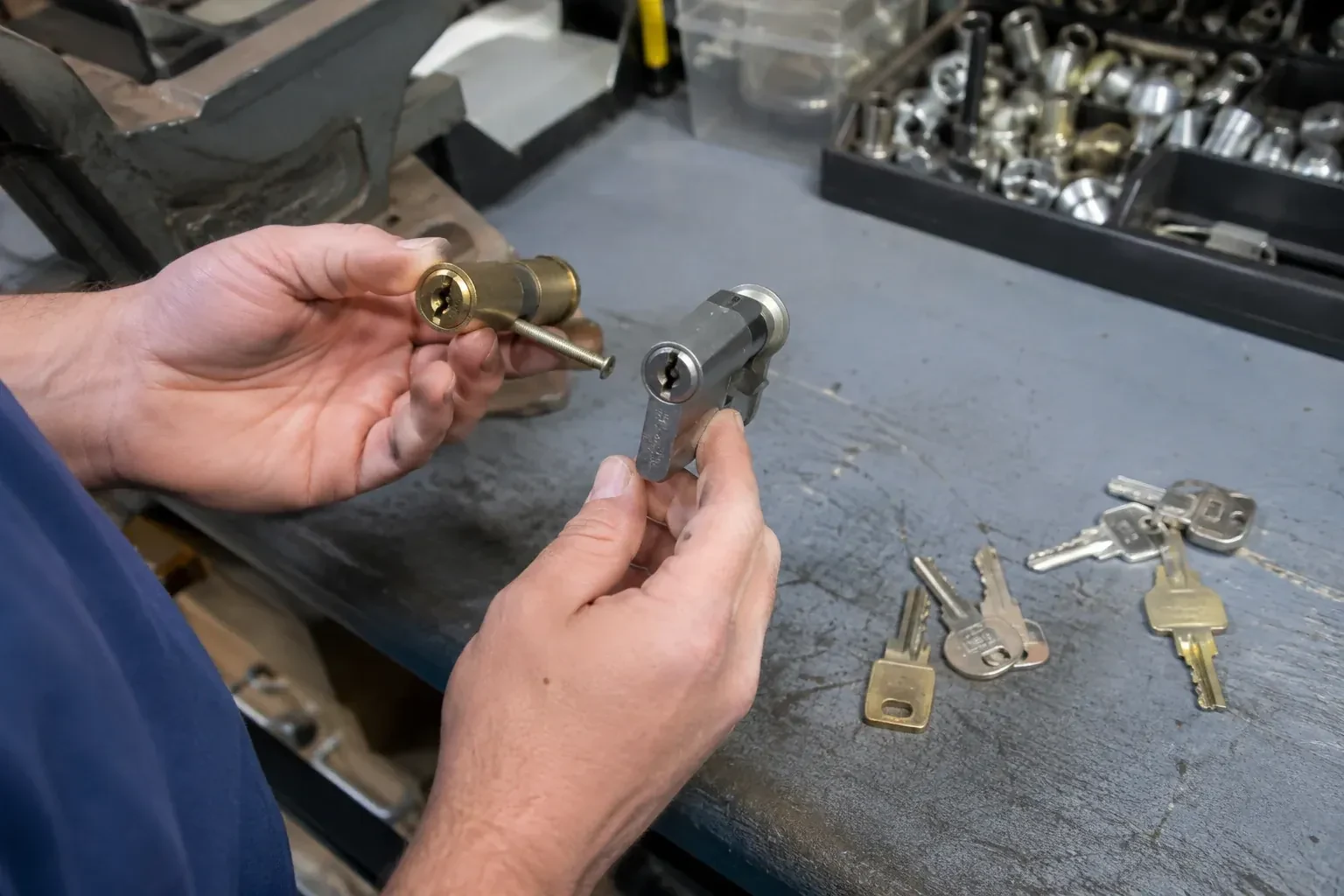
Mailbox, cabinet and desk locks are small but varied. We identify the type and whether a key can be made, a cylinder replaced or the whole unit swapped.
02
Replacing or rekeying it
Most small locks are replaced rather than repaired because new parts are simpler than rebuilding tiny mechanisms. We fit the new cylinder and check the cam lines up with the catch.
03
A tested key and a spare
You get a tested key plus a spare, and a tip about where to keep it, because a mailbox key is the one people lose most.
Good days. Start with a turn.
1/9Lost Keys — Same-Visit Rekey
The renovation wrapped up in the spring. The crew was good, the kitchen looks right, and the key you handed the foreman on day one was never handed back. Nobody kept track of who on the crew carried it.
The builder handed over your new home with a stack of identical keys, and you know the framing crew, the painters and the flooring installers all used a construction key during the build. The doors are brand new, but the key that opens them should be yours alone.
The key still turns, but lately it spins a half-circle further than it used to before the little door lets go, and some mornings it takes a second try. The small cam lock inside is simply worn out.
The keypad on the office safe blinks a low-battery warning every morning now, and whoever notices it first quietly hopes someone else deals with it before the batteries finally give out mid-week.
The team has grown past the point where one shared key still makes sense. New hires need a way in before a manager arrives, and the current setup cannot tell one person's entry from another's.
The kitchen delivery door gets shouldered open more than a hundred times a shift, and lately the latch slips past the strike plate instead of catching it on the first push.
The engine cranks, catches for a second and dies, and a small key-shaped light keeps blinking on the dash. The blade turns the ignition and the doors perfectly well, but the car has stopped recognizing the chip inside the key.
A fob went missing weeks ago somewhere between a coat pocket and a parking lot, and a spare has covered the gap since. Everything still opens and starts without trouble, which is exactly the concern: wherever that missing fob ended up, it may still work too.
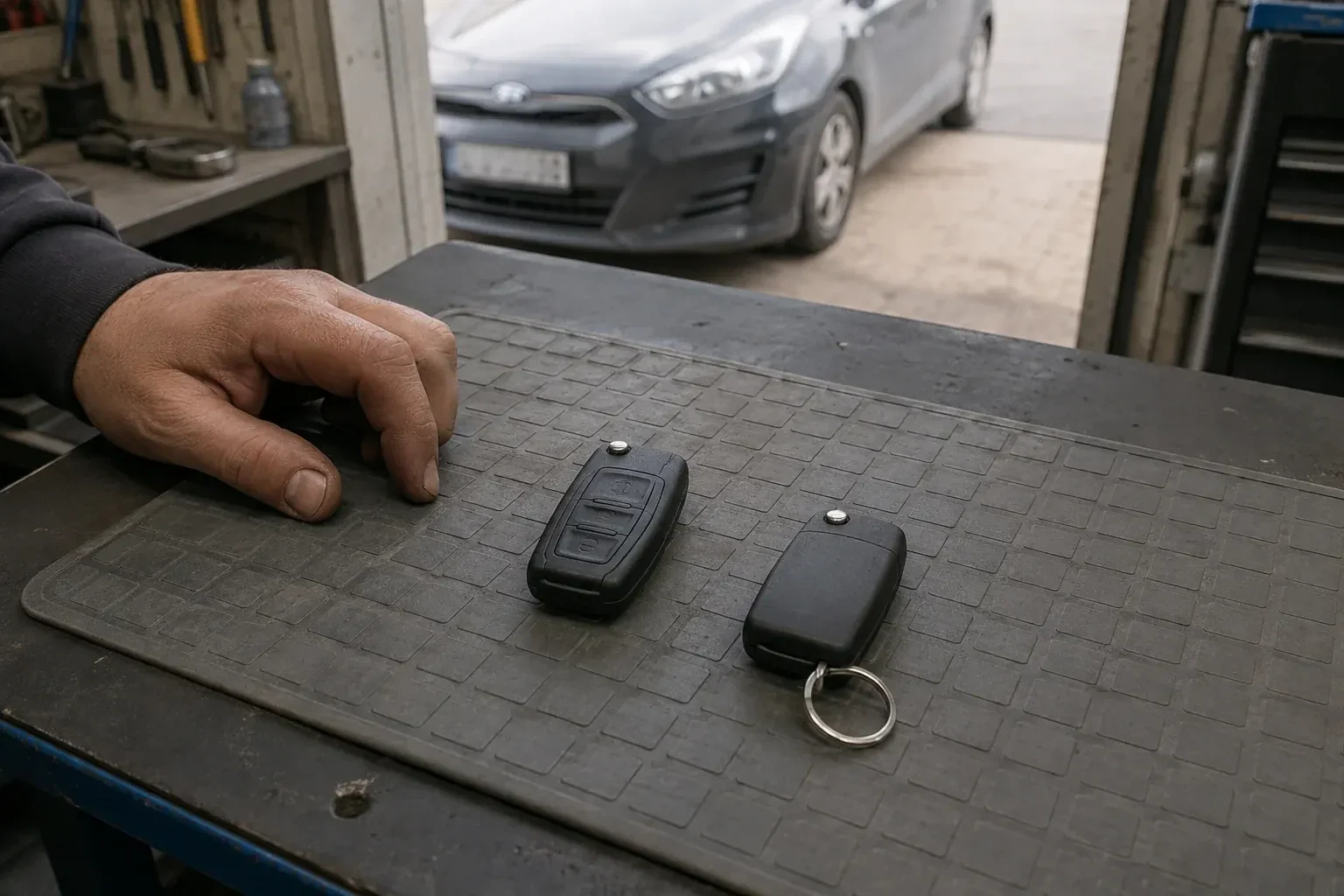
The button on your key fob does nothing now: no beep, no flash of the lights, no click from the doors. The metal blade folded inside the fob still turns the door by hand, so you are getting in and out, just without the remote.
Does the locksmith need to see the actual lost key, or just look at the lock?
Just the lock, and the door it is fitted to. A rekey works on the cylinder itself: the locksmith opens it, fits a new set of pins matched to a fresh key, and the old key stops working the moment that is done, whether or not it ever turns up again. Knowing roughly how the old key looked, cut on both edges, a chip on the head, a certain brand, can still help identify which cylinders in the house shared that key.
My locks are different brands. Is that a problem?
Not a problem, just a detail to plan around. What matters is the keyway, meaning the profile of the slot the key fits, rather than the name on the lock. Different makers sometimes share a profile and sometimes do not. Where two cylinders cannot accept the same key, one is exchanged for a compatible cylinder in the same finish and pinned to match. From the outside the door looks the same and from your pocket it is one key.
Can the same key operate my mailbox and my front door?
It can, if both locks share a compatible keyway and are fitted with cylinders cut to the same combination during the same visit. This is arranged upfront, since it means keying the mailbox lock to match an existing door rather than the usual standalone replacement. Each lock involved is tested afterward so a single key turns every door named, and any other locks on the property keep their own separate keys.
Can a safe be concealed inside a closet or behind a panel?
Yes, provided the spot chosen still allows full anchoring and enough clearance for the door to swing open completely. A closet floor, the back of a built-in cabinet, or a recessed wall cavity can all work, though each limits the size of unit that will actually fit and reach the anchor points properly. Balancing concealment against how often the safe gets opened is worth discussing before a spot is chosen.
Can different doors run on different schedules?
Yes, and this is one of the more useful parts of the system. A front office can unlock for regular business hours, a stockroom can allow only two credentials at any hour, and a loading dock can release only during a set delivery window. Schedules are set per door and per access level in the controller, and can be changed at any time without touching the hardware itself.
Do you handle interchangeable-core (IC) cylinders?
Yes. An interchangeable-core cylinder lets an authorized key holder pull the core and swap in a new one when a key needs retiring, without removing the whole lock from the door. Businesses with regular staff turnover often move to this system because it turns a rekey into a short in-house task rather than a full service call every time.
Will I get a written estimate before the work starts?
You should expect one. Consumer rules for motor vehicle repair work in this province call for a written estimate before any charge and for your authorization of the work, and a good locksmith works that way as a matter of course. The estimate names what is being supplied: the blank or fob, the cutting, the programming, any erasing of old keys and the number of keys, so you can see the parts of the job before agreeing.
Can a cracked fob shell be fixed without replacing the whole fob?
Often, yes. A replacement shell built for the same internal electronics can be fitted around the working circuit board and buttons, so a fob that still functions but looks and feels worn out gets a new case rather than a full replacement. This only applies when the electronics inside are still sound; a board damaged by water or impact may need the fob itself replaced.
What is the difference between an actuator problem and a wiring problem?
An actuator problem usually means the small motor that moves the lock has worn out, though a switch or control signal in the same assembly can fail too. A wiring problem usually means the motor is fine but current is not reaching it, often traced to a cracked wiring boot at the door hinge or a corroded connector, though the locksmith checks the whole path rather than assuming which it is.
Request a visit
Every job in Barrie starts with a proper look before anyone touches a tool. The locksmith checks the cylinder, the latch, the strike and the way the door sits in its frame, then tells you what he found and what he suggests. The price is given at the door once that look is done, so it reflects the actual hardware rather than a guess, and it is the same fee at any hour.