High security · Barrie
High Security Locks
The restricted keys you bought years ago are no longer restricted; the locksmith mentioned the patent has run out and blanks are sold openly.
In plain words
For a business, high security locks are as much about paperwork as metal. A restricted or patented key system registers the premises with the locksmith, names who may order keys, and numbers every key cut. That is what turns a lost staff key from a mystery into a line in a log. The hardware backs it up: cylinders with sidebars and hardened inserts, heavy-duty deadbolts or mortise locks, and strikes set into the structure. Where several doors are involved the keys can be arranged so a manager carries one key and staff carry keys that open only their own areas.
How the visit goesThe pharmacy stockroom, the server closet or the cash office is protected by the same ordinary cylinder as the staff washroom. One lost key on a lanyard would open all of them.
High Security Locks
How the visit goes
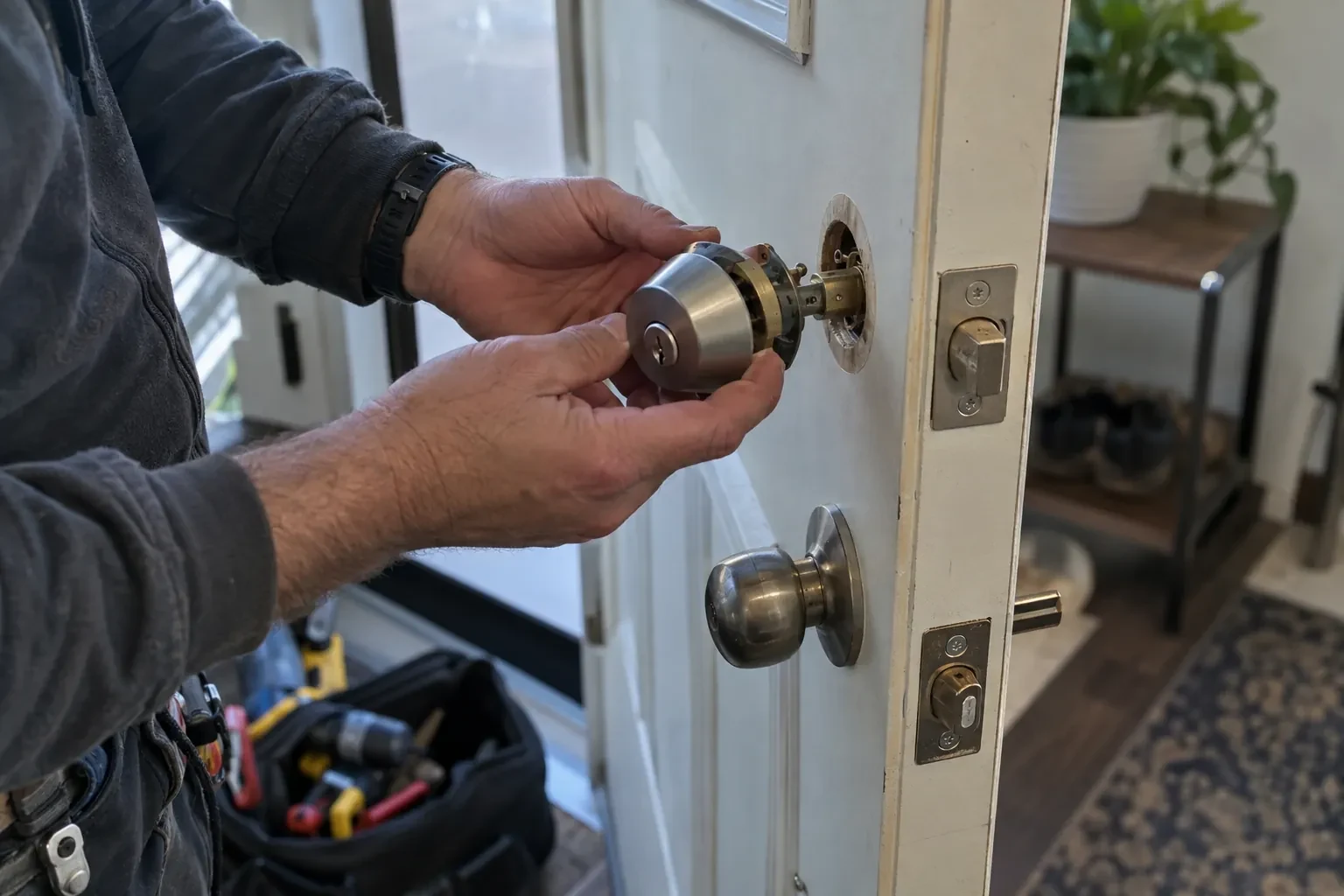
Matching the rating to the risk
Ratings are only useful if someone explains them. A residential deadbolt carries a hardware grade for security, durability and finish based on hammer blows, pulling force and cycle testing. A high-security cylinder carries a separate laboratory listing based on how many minutes it resists picking, drilling and forcing. The locksmith explains what each figure means in practice for your door and points out the rule that matters most: the whole assembly takes the grade of its weakest part. That conversation ends with a recommendation you understand rather than a part number you have to trust.
Heavy hardware for commercial doors
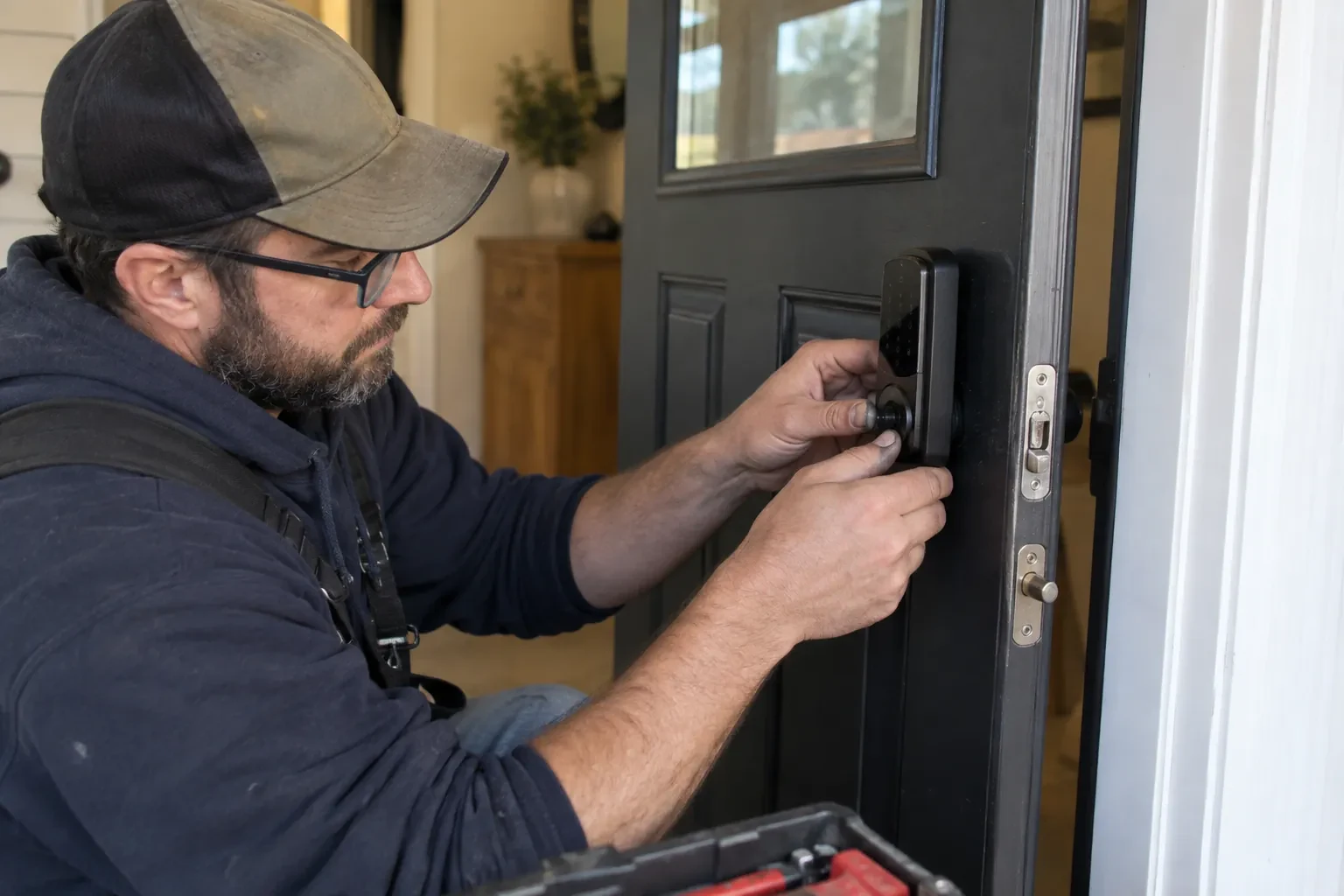
Storefront, warehouse and office doors take heavy-duty lock bodies rather than residential deadbolts. Depending on the door, that means a commercial deadbolt or mortise lock with a hardened cylinder guard, a free-spinning collar that defeats wrenches, and a laboratory-rated cylinder inside it. Narrow aluminium doors get a deadlock made for their stile. The locksmith fits the lock to the existing preparation where it is standard, adjusts the strike in the frame, and confirms that any exit device or closer on the same door still works exactly as before so people leave easily while the door holds from outside.
A key plan that survives staff changes
For a business, the handover includes a key schedule showing every cylinder, every key number and who holds it. When someone leaves, their key comes back and is struck off; if it does not come back, you know exactly which doors it opened and can decide whether one cylinder or several should be repinned. Because the keyway is restricted, a departed employee cannot quietly keep a copy. New hires are issued a numbered key against a signature. The plan lives in a folder or spreadsheet, and the locksmith keeps a matching record so the two can be reconciled whenever you like.
High Security Locks
In the van
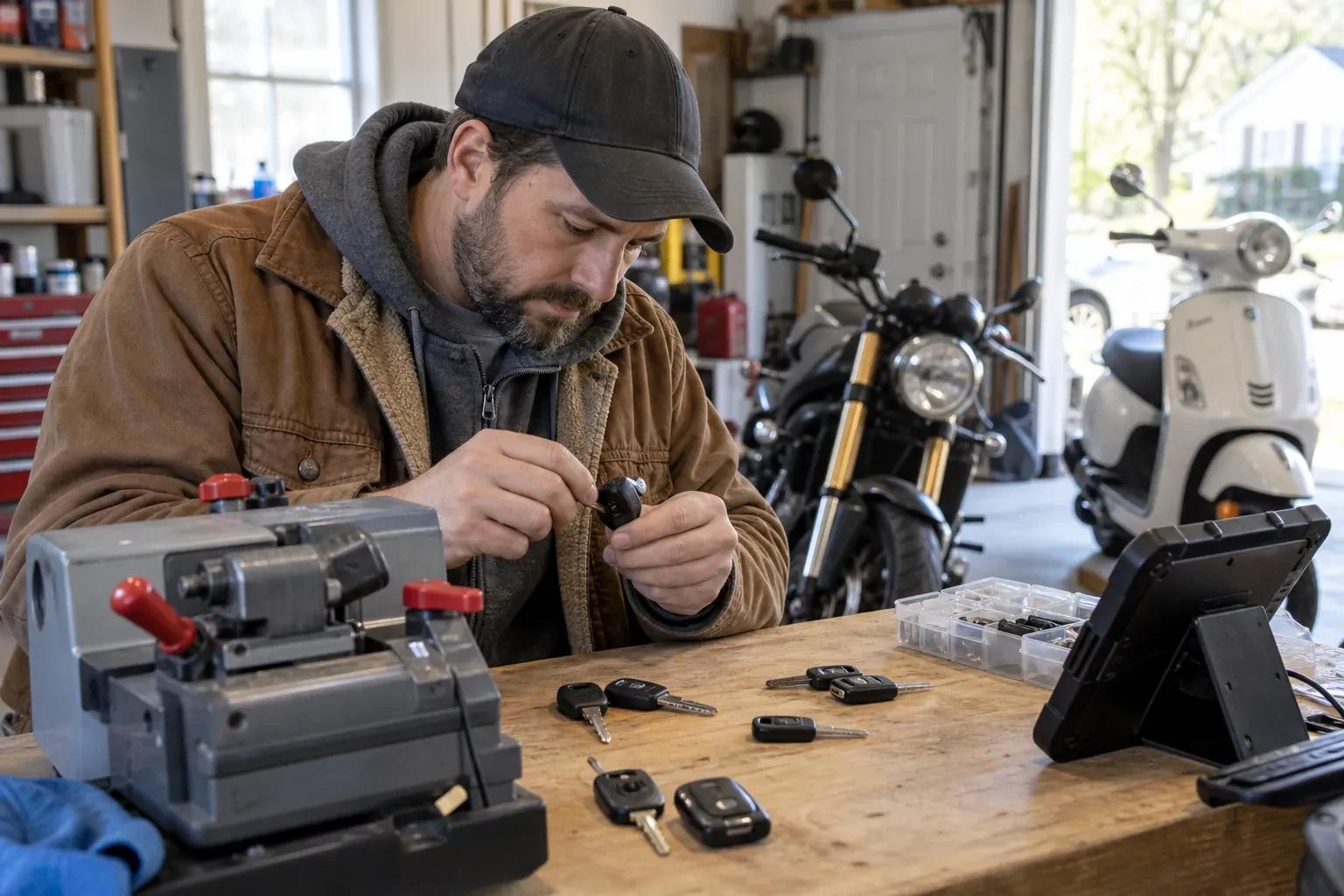
Patented key blanks
Key control authorisation card
Code key cutting machine
Graded deadbolt with hardened bolt
High-security cylinder
High Security Locks
What affects the quote
Condition of the door itself
A solid door that hangs true takes hardware straight away. A dropped, swollen or hollow door may need hinge work, shimming or a recommendation to replace the slab before the lock is worth fitting.
Distance and access
A rural property, a high-rise with loading dock rules or a site that must be visited outside trading hours affects travel and scheduling, and the quote says so plainly.
Commercial lock bodies
Heavy-duty deadbolts, mortise locks, narrow-stile deadlocks and cylinder guards for storefront and warehouse doors are heavier hardware than residential deadbolts and priced as such.
What to have ready
- How many exterior doors do you want included?
- How many keys exist today, and are you confident of that number?
- Does the door drag, stick in cold weather or need lifting to lock?
High Security Locks: questions
QuestionsDo I need to replace my whole deadbolt or just the cylinder?
It depends on what you have. If the deadbolt is a good heavy unit that throws a full inch into a proper strike, a high security cylinder can replace the ordinary one and the rest stays. If the deadbolt is light, worn or throws a short bolt, a new graded deadbolt with a hardened bolt is the sensible base and the high security cylinder goes into that. The assessment tells you which, door by door.
What is the difference between restricted and patented keys?
A restricted keyway is one the manufacturer supplies to a limited set of dealers, so blanks are harder to obtain but not legally protected. A patented key design is protected by a patent for a fixed term, and making or selling the blank without permission is unlawful during that time. Patented systems give the firmer control; restricted ones give a useful step up. The locksmith explains which your chosen line uses and when any patent expires.
What actually makes a lock high security?
Three things working together. The cylinder has a second locking mechanism, usually a sidebar released by finger pins or rotating pins, plus hardened steel in the path of a drill, so picking, bumping and drilling take far longer than on an ordinary lock. The deadbolt and strike are heavier and fastened into the framing. And the key is cut on a patented or restricted blank that only an authorised person can have copied. Remove any one and the door is weaker than the label suggests.