Commercial · Barrie
Panic & Exit Hardware
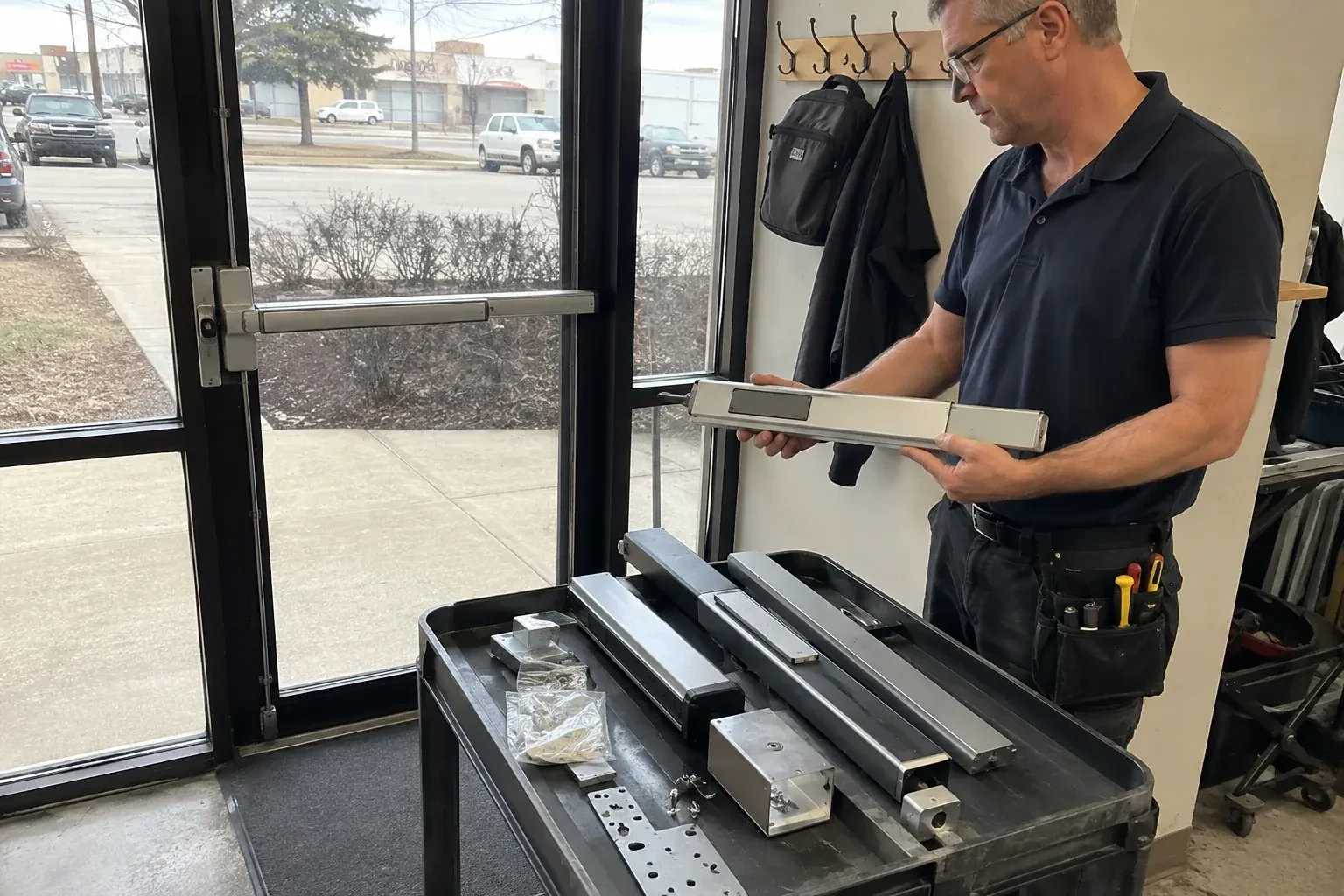
The crossbar on the loading-dock door barely returns anymore.
In plain words
The visit ends with a record, not just a working door. Every device fitted is logged with its type, its rating, the force and latch checks it passed, and who now holds the dogging key. That record is what a fire inspector, an insurer or a new property manager asks for later, and it is far easier to hand over on the day of installation than to reconstruct afterward from memory of what went on which door.
How the visit goesSomeone at the front counter always has to unlock the side door by hand before the lunch rush, because the round doorknob out there was never meant to be an exit for a room this size.
Panic & Exit Hardware
How the visit goes
Checking what is already fastened to the door
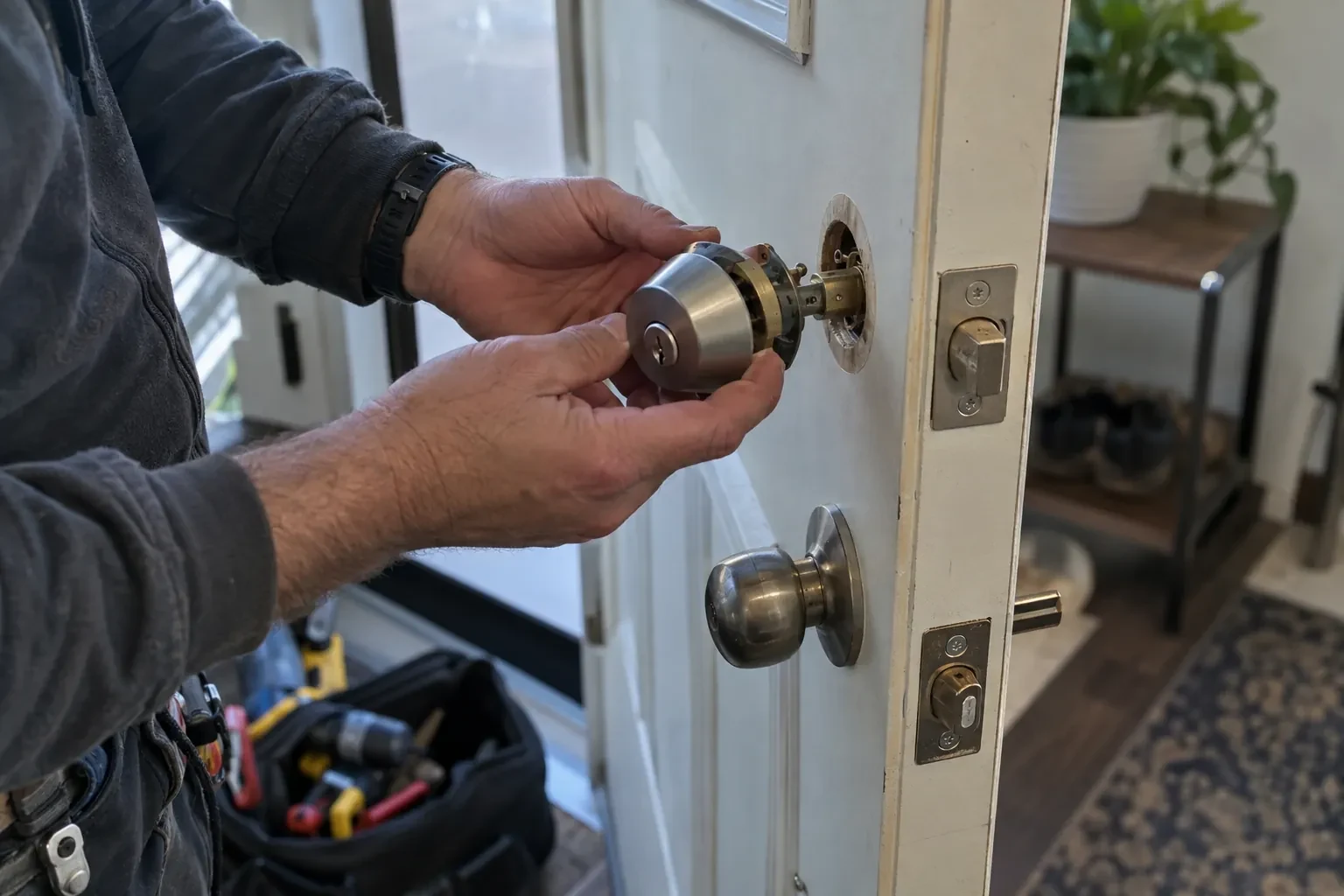
A surprising number of exit-hardware calls turn up a second lock nobody had mentioned: a hasp and padlock added for security, a slide bolt at the top of a rarely used door, or a deadbolt installed long after the original exit device. Each of these has to be understood before work starts, because an exit door can only be trusted to open under one motion if every fastening on it releases the same way. The locksmith notes what is there, explains what it means for the door's exit function, and works out with the owner what stays and what comes off.
Labelling, signage and the dogging key
Any signage the opening needs, such as a label identifying the door as an exit or noting an alarm, is fitted alongside the hardware rather than left for later. Where the device carries a dogging function on a standard opening, the key or keyed cylinder for it is handed to whoever the building's management names as responsible, along with an explanation of when dogging is appropriate; on any door that sits in a fire separation, mechanical dogging is left off the device entirely and is never installed as a management choice.
A maintenance rhythm worth keeping
Exit devices are mechanical hardware and benefit from the same light attention as any other: a periodic check that the release force has not crept up, that the latch still seats fully, and that nothing has been added to the door that would block its exit function. Fire door assemblies carry their own inspection and testing rhythm, and folding the exit hardware into that same routine check keeps the whole opening, not just the lock, in the condition it was fitted in.
Panic & Exit Hardware
In the van
Request-to-exit switch
Rated exit device
Force gauge
Through-fixings and mounting hardware
Outside trim (pull, lever or cylinder)
Panic & Exit Hardware
What affects the quote
Number of keys or dogging cylinders
Cutting keys for the outside trim and providing a dogging key or keyed dogging cylinder for the device is counted individually, the same way any keyed hardware is.
New preparation or existing cut-outs
A door with no prior hardware needs new holes cut and reinforced to the device's template. A door already prepared for a similar device, even an old one, is often a simpler fit with less new drilling.
Condition of the existing hardware
A device that only needs adjustment, cleaning and new fasteners costs less in labour than removing a seized or badly worn device and fitting a replacement in its place.
What to have ready
- Has a fire inspector or building official already flagged a specific door?
- Does any door already have a hasp, padlock or extra deadbolt fitted?
- Are any doors currently propped open during business hours?
Panic & Exit Hardware: questions
QuestionsWhen does a door actually need this hardware rather than a regular lock?
It comes down to occupancy and occupant load rather than preference. Rooms used for assembly, such as banquet halls, places of worship or gyms, and doors serving a stairway in a busier building, are where this hardware becomes the standard choice instead of a keyed lock on the exit side. A fire inspector or building official is the practical way to confirm whether a specific room has crossed that line.
What is the difference between a rim, mortise and vertical-rod device?
A rim device sits on the surface of the door and suits most single openings, including many tall and fire-rated doors on their own. A mortise device fits into a pocket cut in the door's edge and is chosen where a heavier case or a particular trim style is wanted. A vertical-rod device runs rods to the top, or top and bottom, of the frame, which suits an opening that specifically needs latching at more than one point rather than height by itself.
Does a retrofit into an older building work the same way as new construction?
The device and trim choices are the same, but a retrofit usually has to work with a door and frame that already carry someone else's old hardware preparation. Reading what holes and reinforcement already exist, and choosing a device that can use or cleanly replace them, is a bigger part of a retrofit than of a new opening built with the hardware in mind from the start.
Related services
- Master Key System DesignAfter a busy shift the manager counts the keys coming back in and loses track of who still has one.
- Access Control InstallationHead office wants a record of who opens the branch and when, tied to an actual name rather than a shared code scrawled on a sticky note taped under the till.
- Commercial-Grade Lock ReplacementThe kitchen delivery door gets shouldered open more than a hundred times a shift, and lately the latch slips past the strike plate instead of catching it on the first push.