Car keys · Barrie
Car Key Replacement
You bought the car privately and it came with a single key on a shoelace.
In plain words
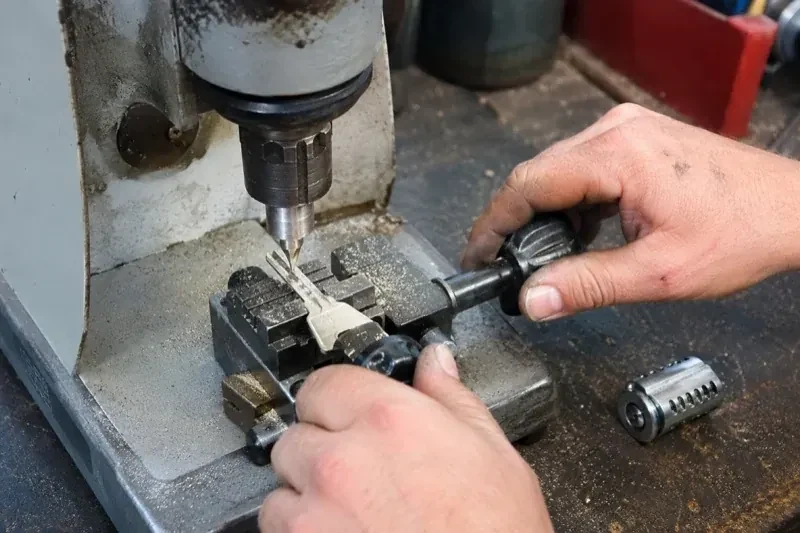
Older vehicles without an immobilizer are a pleasure to key, but whether a given car has one is checked rather than assumed from age, since several early-2000s vehicles already shipped with a factory immobilizer. Where a car genuinely needs only a blade, it is cut to the factory code or to a reading of the lock rather than copied from a worn original, so it seats cleanly in an ignition that has seen twenty winters. Where the ignition wafers are tired, the locksmith can say so and service the cylinder in the same visit. The result is a key that turns like the car was new, without the daily jiggle.
How the visit goesThe key snapped at the head while you were turning it in a stiff, frosty door lock. Half the blade is in your hand, the rest is inside the lock, and the plastic head still lights up when you press a button.
Car Key Replacement
How the visit goes
The car itself: battery, access and location
Programming writes to the vehicle's computers, so the locksmith checks the basics of the car before starting. A weak battery from a car that has sat locked for weeks is put on a maintainer so the voltage stays steady through the session. The diagnostic port under the dash has to be reachable, which means the car has to be opened first if every key is gone. Where the car is parked matters as well: an underground garage with poor light, a tight street spot or a snowbank against the driver's door all shape how the work is set up. A few questions on the phone cover most of this.
Decoding the door lock when there is no code
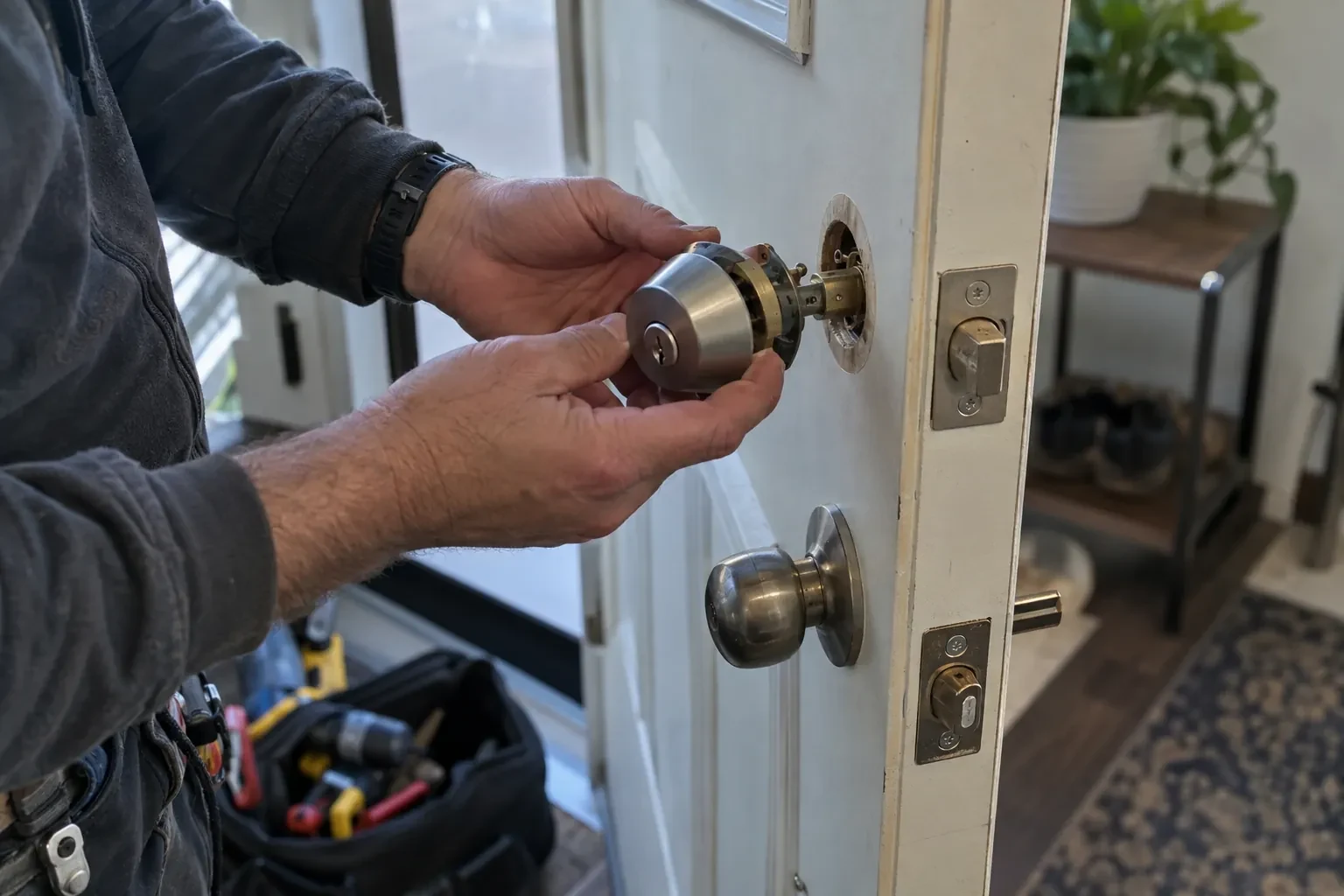
When the code is unavailable, the lock itself becomes the source. The locksmith works a decoding pick into the driver's door cylinder, feels each wafer to its set position and reads off the depth, producing a full cut sequence without removing the lock from the door. The blank is then cut to that reading and tried in the door and the ignition. On cars where the ignition carries an extra wafer the door lacks, the last position is found by trying the small number of possible depths. This is careful, patient work that leaves the door lock exactly as it was.
Keys that work every lock on the car
You leave with keys that have been tried, not merely programmed. Each one has opened the doors, turned or woken the ignition, started the engine and worked every button it carries, and you have watched it happen. If the car has a mechanical lock that was stiff, it has been freed and lubricated so the blade is a genuine backup. Should the old key have been rebuilt around its original electronics, it has been through the same checks as a brand-new one. The point of the routine is simple: the next time you reach for the key, there is nothing to wonder about.
Car Key Replacement
In the van
Laser-style milling cutter
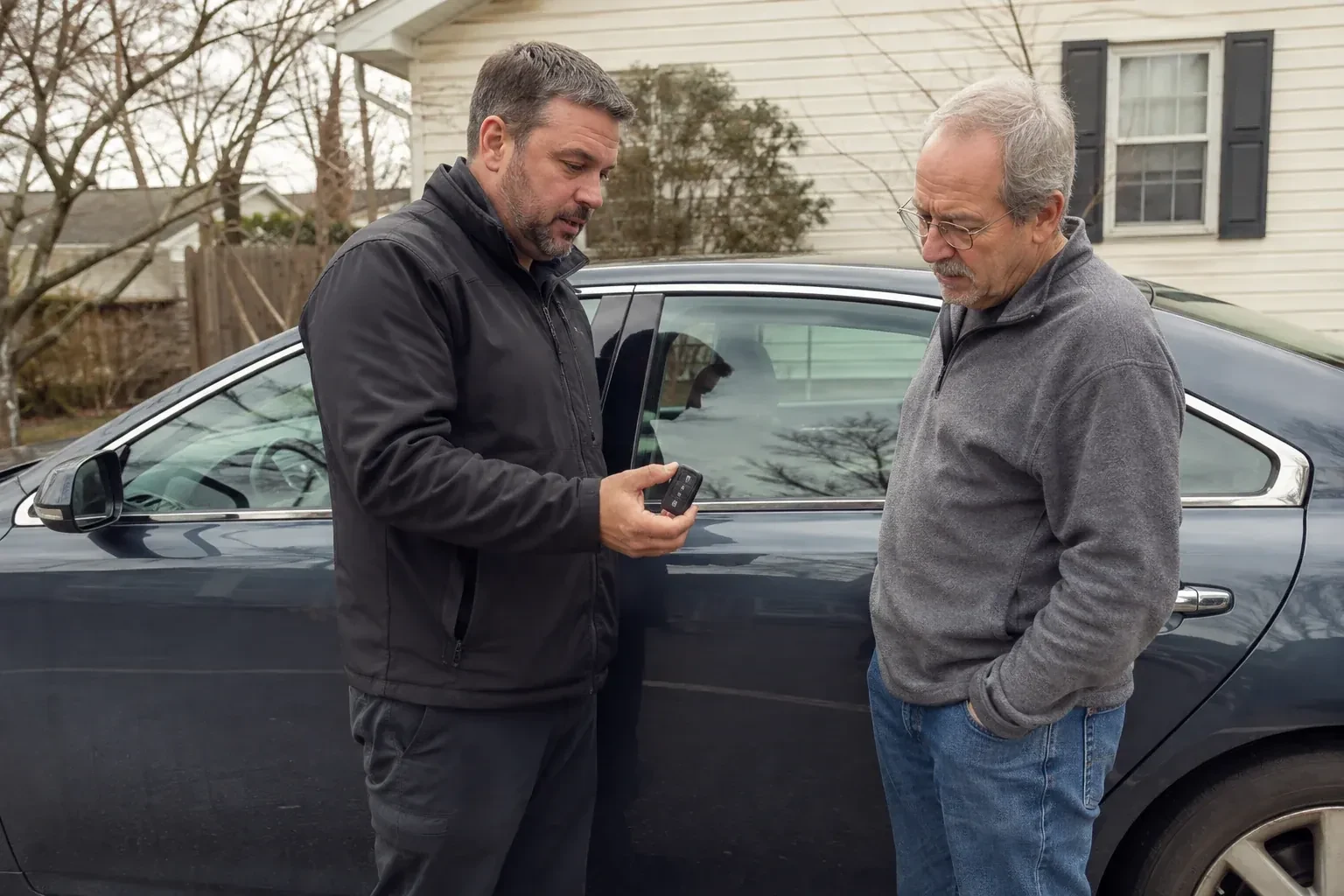
Proximity fob with emergency blade
Remote-head key shell
Transponder chip
Transponder key blank
Car Key Replacement
What affects the quote
Programming route the car allows
Some vehicles accept a new key through an on-board routine, most through the programming tool, and a few only through a dealer procedure. The route determines the time and the data involved, and the quote says which it is.
Functions on the fob
Locking and unlocking come with every fob. Trunk release, panic, remote start and power liftgate depend on the fob part number, so a fob with more functions is quoted differently from a basic one. Phone-as-a-key is quoted separately, set up through the vehicle's own software rather than by fob choice.
Erasing the keys you no longer hold
Removing lost or stolen keys from the immobilizer during the session is a small extra step, and re-registering the keys you kept follows it. If you want the old keys silenced, say so and it is quoted.
What to have ready
- Do you have any key that still starts the car, or are they all gone?
- How many keys would you like to leave with?
- What is the year, make and model, and can you read the VIN from the windshield or the permit?
Car Key Replacement: questions
QuestionsHow many keys should a car have?
Two working keys is the sensible minimum, and it is what most vehicles left the factory with. One lives on your ring; the other lives somewhere safe away from the car. With two, any future key work is an add-a-key job rather than a reset from nothing. Households that share a vehicle, or owners with a remote starter on one fob and a plain key for the valet, sometimes prefer three.
Will I get a written estimate before the work starts?
You should expect one. Consumer rules for motor vehicle repair work in this province call for a written estimate before any charge and for your authorization of the work, and a good locksmith works that way as a matter of course. The estimate names what is being supplied: the blank or fob, the cutting, the programming, any erasing of old keys and the number of keys, so you can see the parts of the job before agreeing.
Does the car have to be towed to a shop?
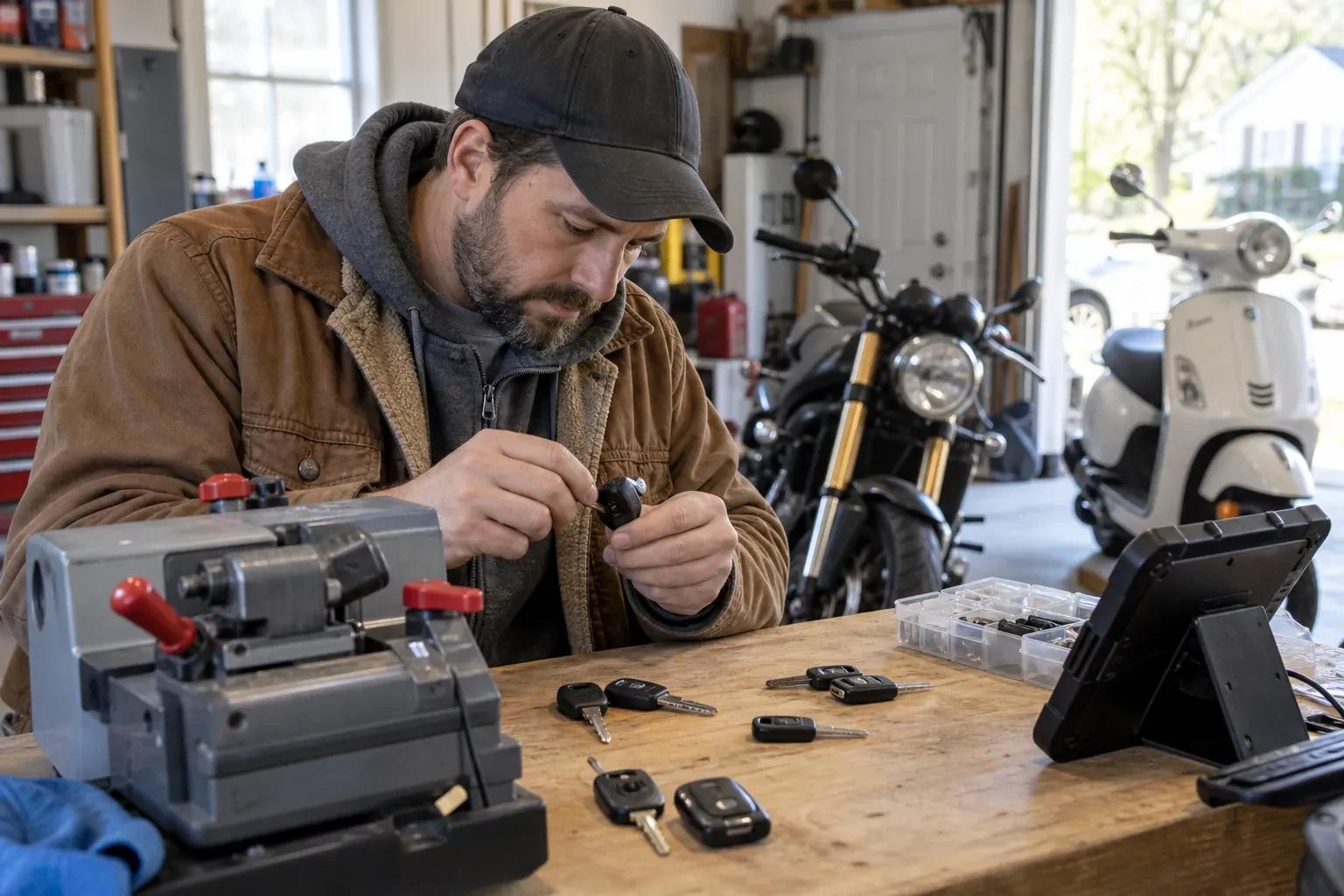
Often not. The cutting machine, blanks and programming tool travel in the van, and the work is done where the car sits: a driveway, a parking garage, the roadside or a workplace lot. The locksmith connects to the diagnostic port under the dash and cuts and programs on the spot. An unsupported or dealer-only system may still need the vehicle to go to a dealer or a suitably equipped shop, which the VIN check flags beforehand.
Related services
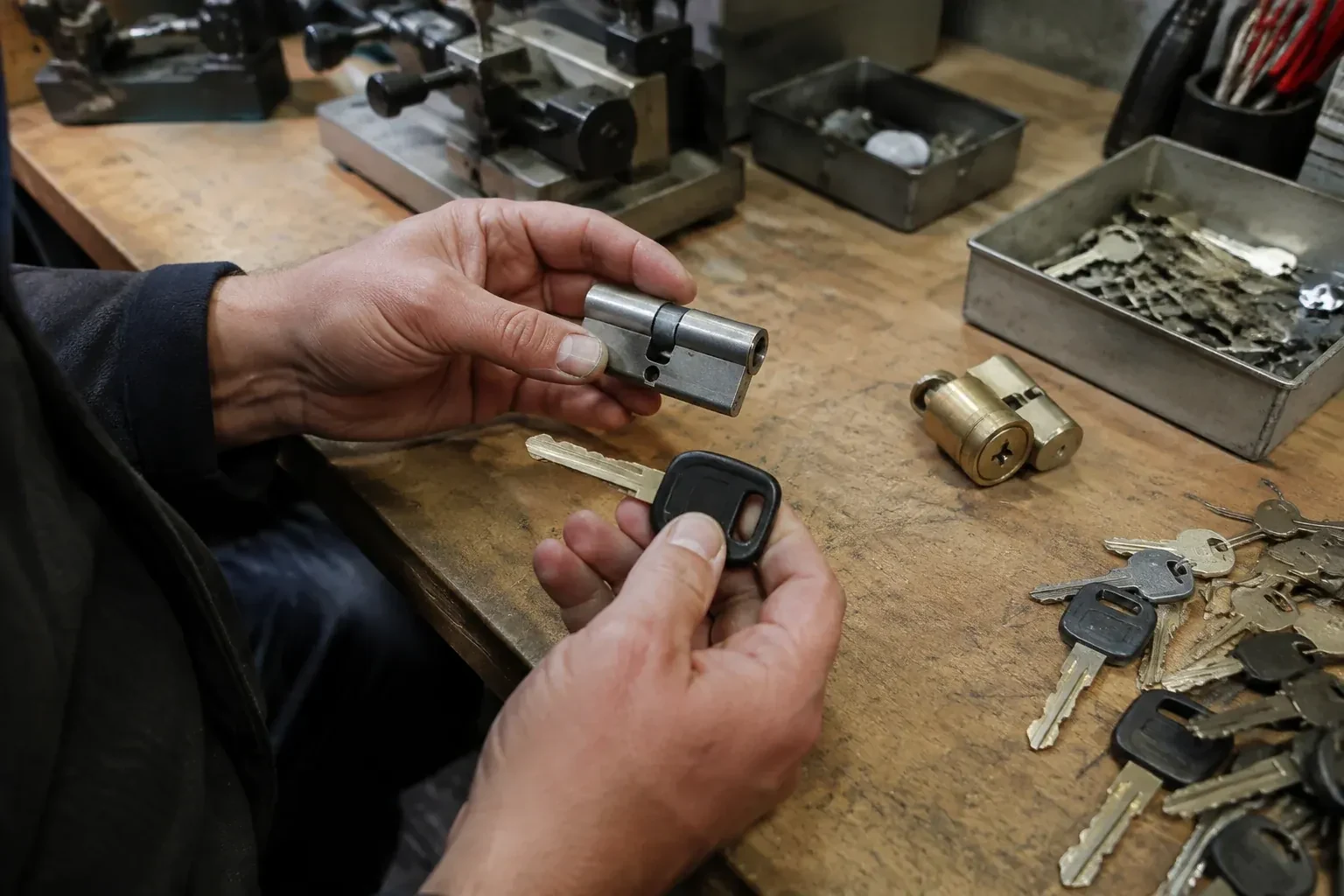
- Spare Car Key DuplicationOne key opens the car, starts the car, and rides in one pocket every day.
- Key Fob ProgrammingEvery fob for the car disappeared at once inside a bag that was never recovered, and the vehicle now sits in the driveway with no way in and no way to start it.
- Transponder Key ProgrammingThe remote fob has gone silent, the doors won't unlock with a button press, and the little emergency blade tucked inside it has not been used since the day the car was bought.