Car keys · Barrie
Car Lockout Service
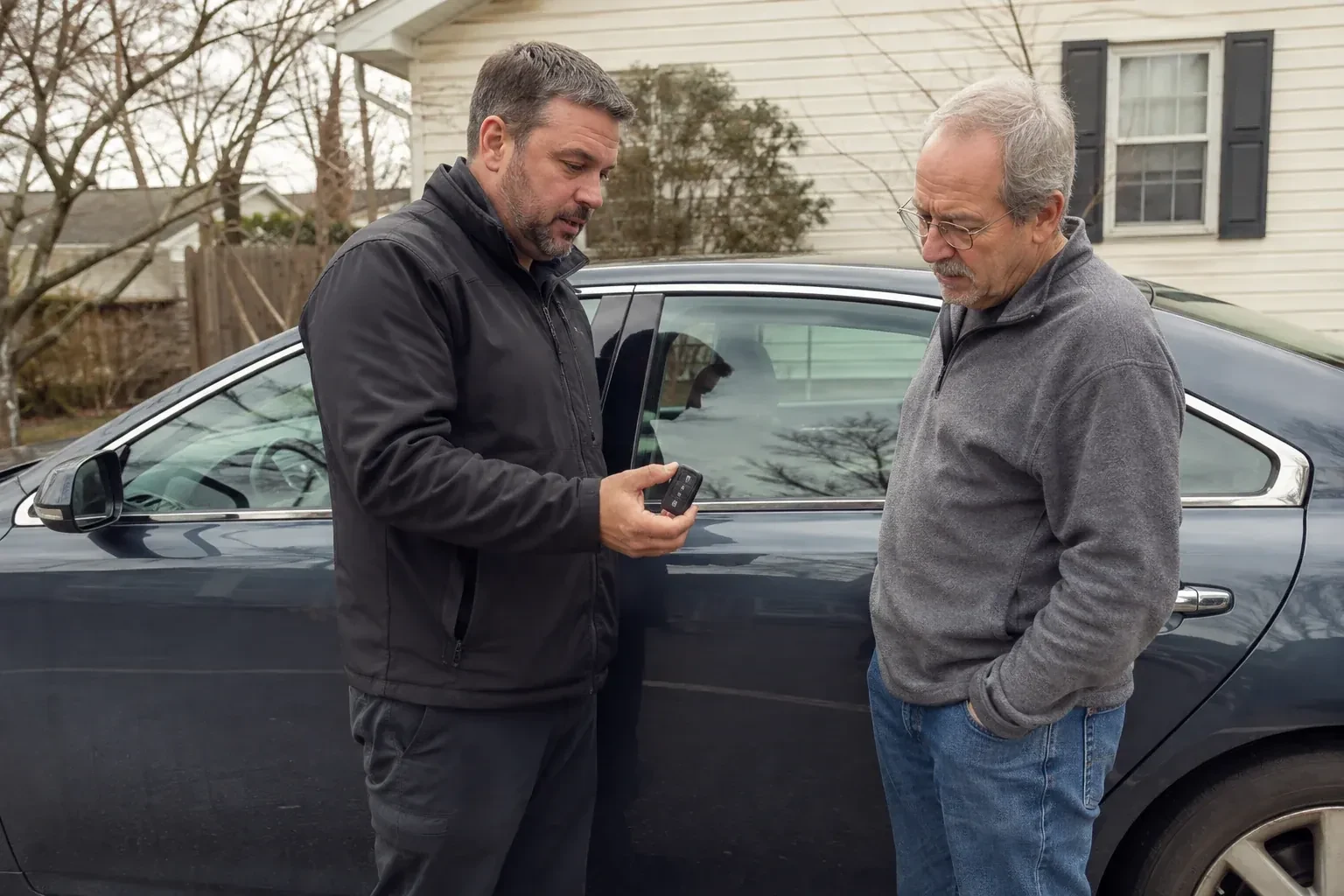
You pressed the fob at the office door and nothing happened.
In plain words
Most car lockouts end with nothing to show that anyone was ever there. Purpose-made tools do the work a key or a finger would do from inside: an inflatable wedge opens a small gap at the top of the door frame, a padded reach tool presses the unlock button or lifts the handle, and door-edge guards keep paint and seals clean. Where a door cylinder exists, a pick-and-decoder made for that keyway turns it without marks. Coat hangers, screwdrivers and forced windows have no place in the process, and breaking glass is reserved for genuine emergencies where a life is at stake and responders are already on the way.
How the visit goesYou reached the parking lot after a long hike and the pocket that held your car key is empty. Somewhere along ten kilometres of trail is the only key you own, and the car, your wallet and your dry clothes are all locked behind glass.
Car Lockout Service
How the visit goes
Where the car is sitting
A car in a driveway, a lit parking lot, an underground garage or on the shoulder of a four-hundred-series highway each ask for a different approach. On a highway the locksmith parks to shield the work, keeps hazard lights on and works from the side away from traffic, the same routine the provincial driver's handbook gives stranded drivers. In a tight garage the question is clearance to open the door and light to see inside the cabin. In a private lot or a building with gated access, someone may need to let the van in. Telling the locksmith exactly where the car is, and how to reach it, saves the first ten minutes on site.
Keys in a closed trunk
A trunk with the keys inside is almost never opened at the trunk lock. Where the cabin has a usable path, it is opened first and the trunk released from there: a release button by the driver's seat, or a fold-down rear seat that gives a hand through to the trunk; the glowing emergency handle inside the trunk itself is for a trapped occupant, not a cabin control, and some vehicles disable the cabin release entirely. Where a car has a valet lock that isolates the trunk from the cabin, the trunk cylinder is decoded and turned in the same way as a door. The keys come out, the trunk latch is checked, and nothing on the lid is marked.
Ready for the next freeze
After a winter lockout the car is set up to take the next cold snap in stride. The door cylinder has been dried and given whatever lubricant the vehicle maker specifies for cold weather, and the door seals have been wiped and treated with silicone so they release instead of bonding to the frame. A small tube of lock de-icer for a coat pocket, never left in the locked car, covers the mornings a keyway ices over. Parking nose-out of the wind where you can, keeping the driver's door seal clean of slush, and swapping the fob battery each autumn are the small habits that carry a car through to spring.
Car Lockout Service
In the van
Automotive pick and decoder
Transponder key blanks
Padded long-reach tool
Key programmer
Lock de-icer
Car Lockout Service
What affects the quote
Type of key or fob
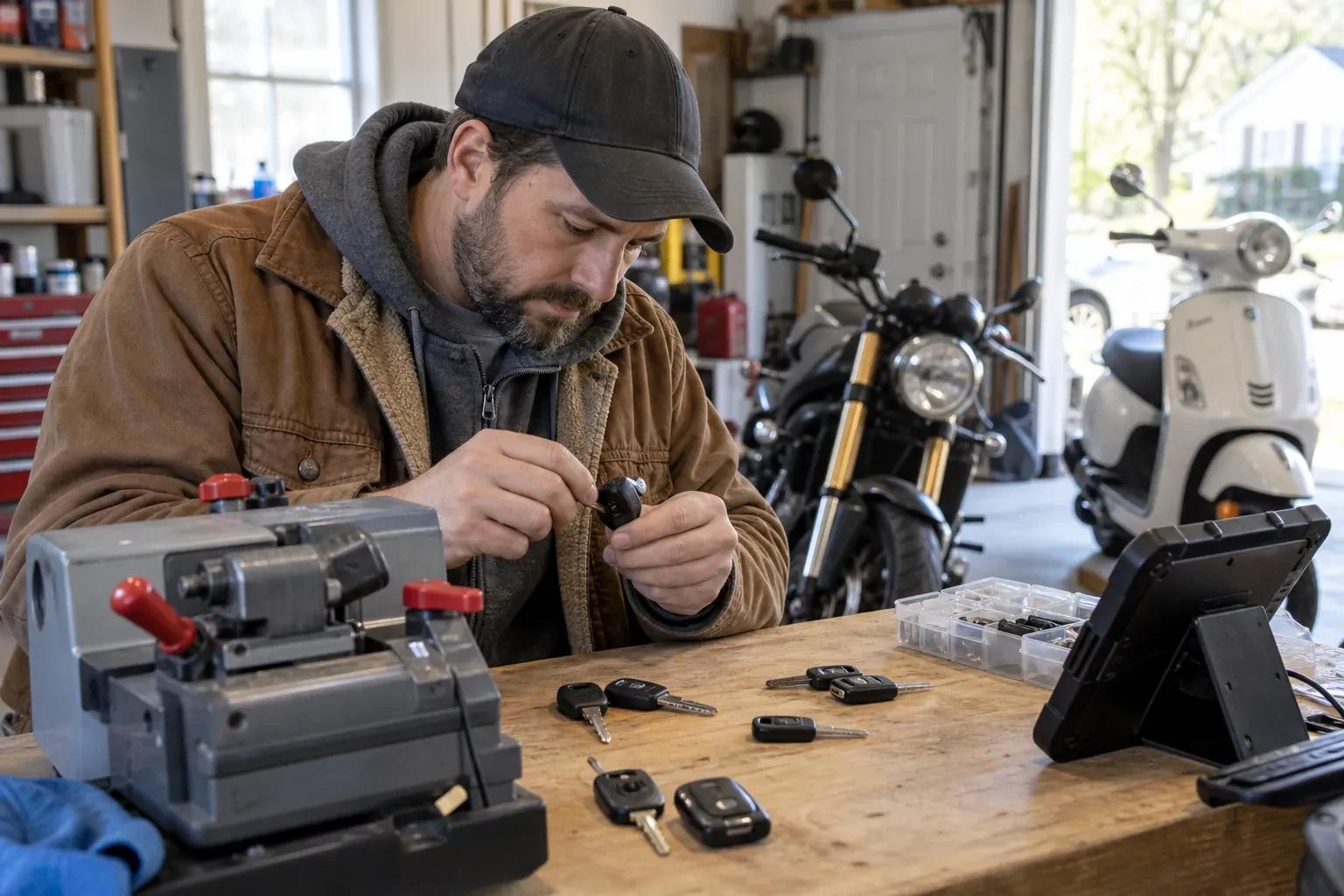
A plain metal key, a transponder key with a chip, a remote-head key and a proximity fob each cost different amounts as parts, and each takes its own programming step when one has to be replaced.
Keys inside versus keys lost
If the keys are on the seat, the visit ends when the door opens. If they are gone, cutting and programming a replacement is a second stage of work quoted on its own.
Time of the call
An evening, weekend or holiday call costs the same amount as a weekday afternoon one for a car lockout. The locksmith looks at the vehicle and the type of key or fob at the roadside and confirms the exact figure there, in person.
What to have ready
- Where are the keys right now: inside, in the trunk, lost, broken or in a fob that has stopped working?
- What is the make, model and year of the vehicle?
- Is the car showing any signs of life, such as interior lights or a horn?
Car Lockout Service: questions
QuestionsMy wallet, permit and everything else are locked inside. What then?
That is the ordinary case, and there is a routine for it. Tell the locksmith on the phone so the plan is agreed in advance. Often the plate can be matched to a photo of the permit on your phone, a family member can bring identification, or a fleet manager can confirm a company vehicle. Otherwise the door is opened and the documents in the glovebox are checked against your identification before the locksmith leaves.
My car is in a gated lot or an underground garage. Does that matter?
Only for getting the van to the car. Tell the locksmith how the lot is entered, whether a code, a buzzer or an attendant is involved, and which level the car is on, so nobody loses time at the gate. In a tight garage the locksmith checks there is room to open the door fully and enough light to see the interior switches, and brings a torch if not. The opening itself is unchanged.
My child is locked in the car. What should I do first?
Call 911 before you call anyone else. A vehicle interior can climb past 50°C in about twenty minutes on a mild day, and a cracked window does little, so responders treat a child in a closed car as an emergency and are equipped to get in at once. Then call the locksmith, who will come as backup and can also make sure the car is secured and working afterwards. In winter cold the same rule applies.
Related services
- Spare Car Key DuplicationOne key opens the car, starts the car, and rides in one pocket every day.
- Key Fob ProgrammingEvery fob for the car disappeared at once inside a bag that was never recovered, and the vehicle now sits in the driveway with no way in and no way to start it.
- Transponder Key ProgrammingThe remote fob has gone silent, the doors won't unlock with a button press, and the little emergency blade tucked inside it has not been used since the day the car was bought.