Change or rekey · Barrie
Deadbolt Installation
The old deadbolt has grown lazy.
In plain words
Steel-clad and fibreglass doors, the common insulated entry doors in newer subdivisions, take a deadbolt happily as long as they are cut for it properly. The skin is thin metal or resin over a foam core, often with a wood block at lock height, so the cross bore is made with a hole saw suited to the skin, at low speed, and the edge is finished with a plate rather than a chisel mortise. Solid wood doors in older homes are cut conventionally, with care for splitting at the edge. The locksmith reads the door before drilling and picks the method that leaves a clean opening and a true-running bolt.
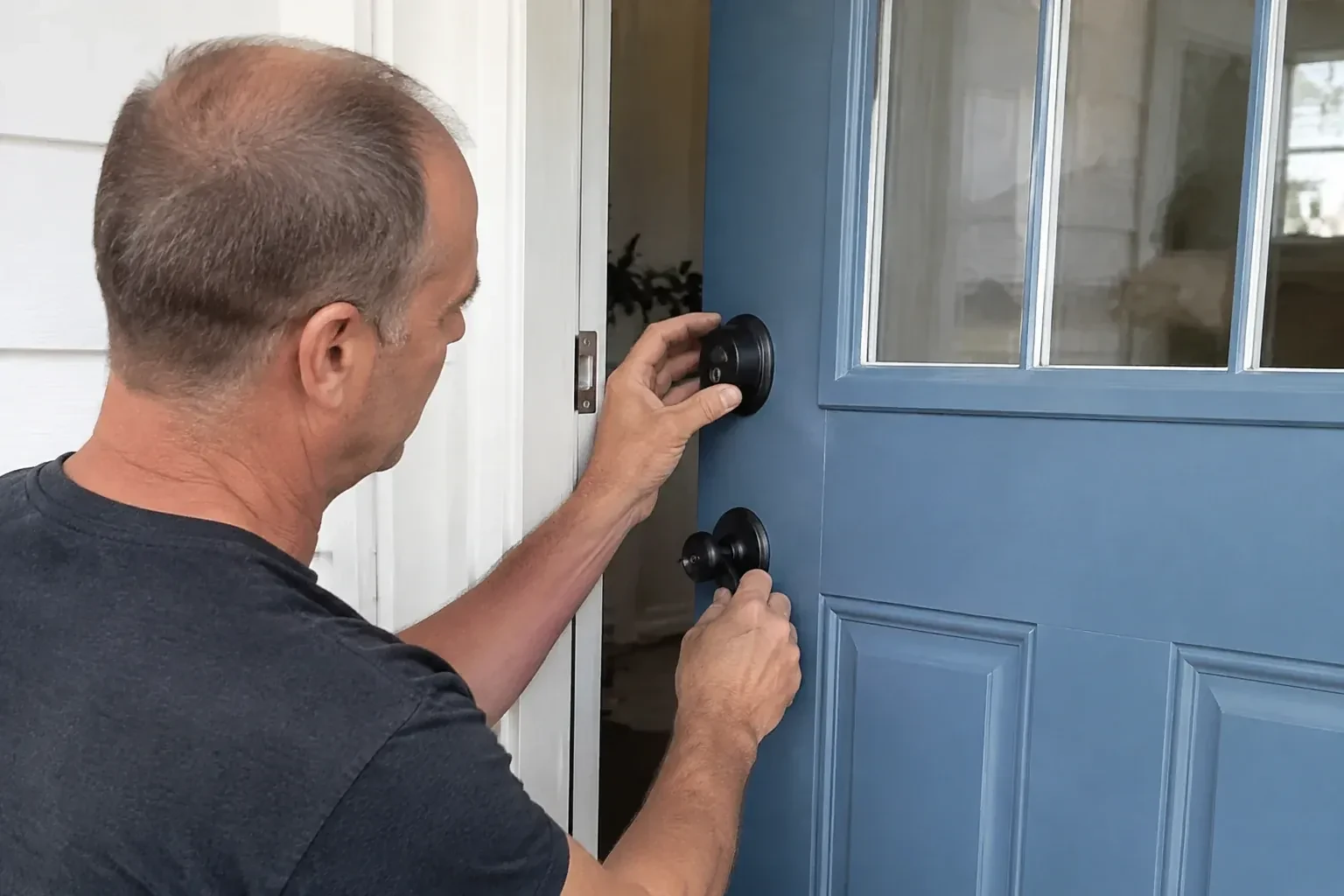
How the visit goesThe old deadbolt has grown lazy. You turn the thumb-turn and the bolt creeps out halfway, then needs a second push with the door pulled tight. Some mornings the key has to be jiggled before it will come back out.
Deadbolt Installation
How the visit goes
Measuring the bore and the backset
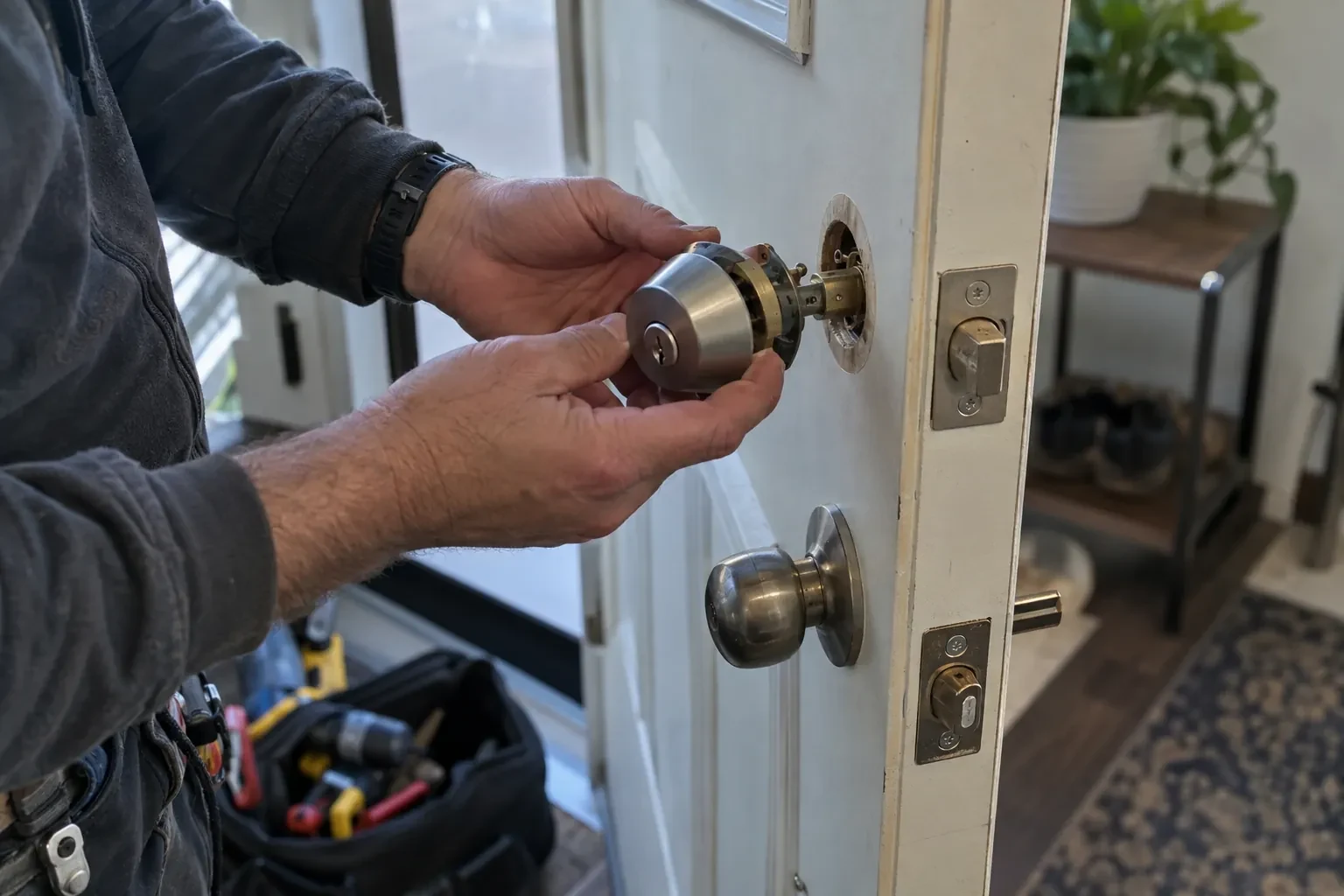
Deadbolts are built around two dimensions. The cross bore is the large hole through the face of the door, 54 mm on most residential hardware, though some older or imported locks used 38 mm. The backset is the distance from the door edge to the centre of that hole, 60 mm or 70 mm on nearly every door in this part of the world. If a deadbolt is being replaced, both are measured so the new lock lands in the existing holes without a shim or a gap. On a new installation they are chosen to match the knob below, so the two locks line up and any future keypad or smart deadbolt drops straight in.
Working on a steel-clad or fibreglass door
Insulated doors are cut with the skin in mind. A hole saw with fine teeth is run at low speed through the metal face, with the jig doing the steering so the saw does not skate on the smooth surface, and the cut is finished from the second face to keep both skins clean. Swarf is vacuumed out of the core so it cannot work into the bolt. The edge is usually a wood or composite stile inside a folded metal lip, and the bolt is finished with a drive-in collar or a plate screwed into the stile rather than a chiselled mortise. Fibreglass is scored first so the skin does not chip, then cut the same way.
A bolt with a full, deadlocked throw
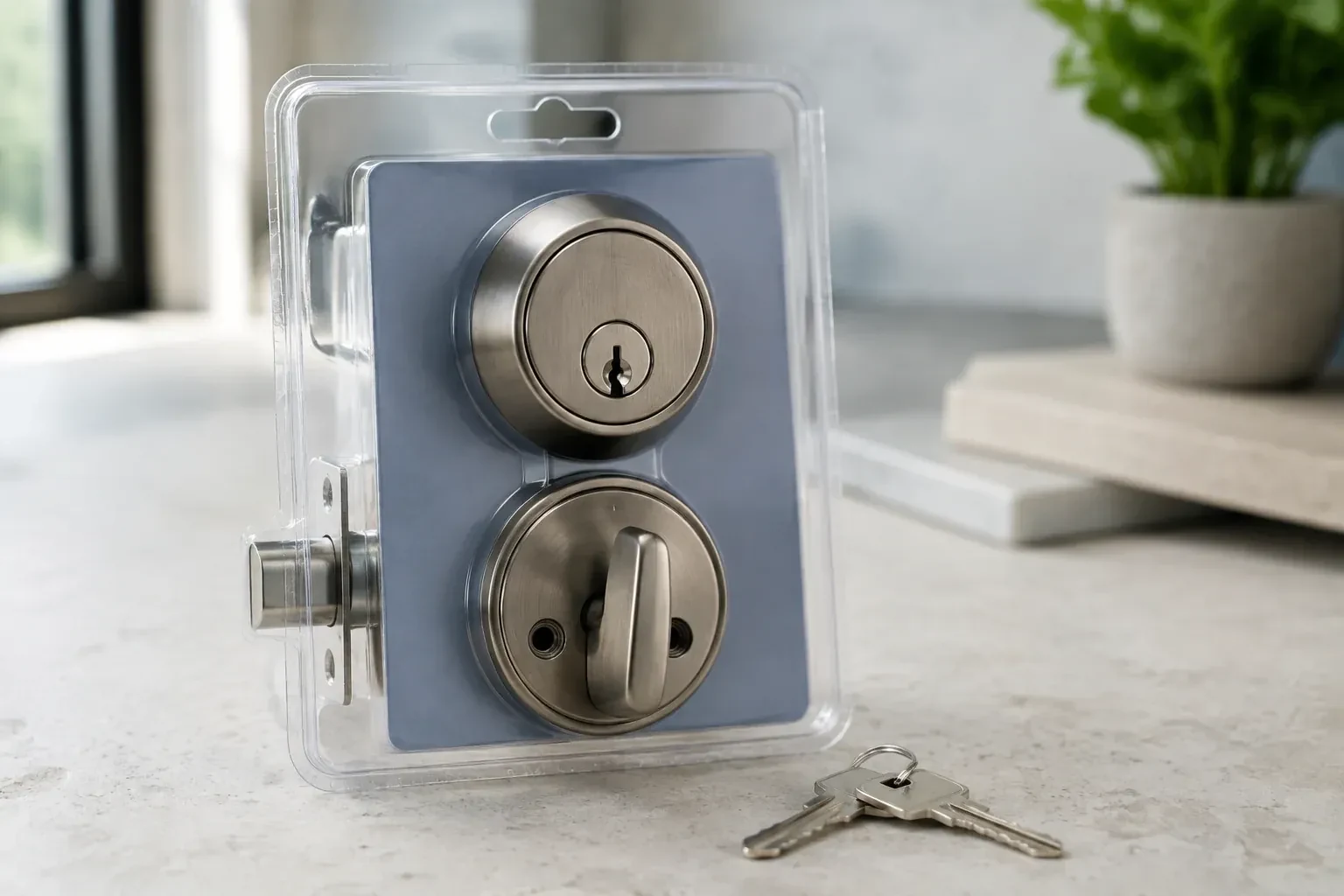
What you feel at the end is a bolt that travels its whole length into the frame with one turn and stops with a definite click, which is the deadlocking position that stops the bolt being pushed back from the edge. From outside, the key turns a cylinder that sits in a collar which spins if gripped. From inside, the thumb-turn moves the same bolt without a key. The locksmith shows you both, throws the bolt with the door closed so you hear it seat, and hands over the packaging with the model, finish and backset written on it for the day a matching lock is wanted on another door.
Deadbolt Installation
In the van
Single-cylinder deadbolt
Sharp chisel and mallet
75 mm (3 in) strike screws
Strike box
Boring jig and 54 mm hole saw
Deadbolt Installation
What affects the quote
Grade and type of deadbolt
A builder-grade bolt, a residential model with a high security grade, and a heavy commercial-pattern deadbolt sit at different points in the hardware part of the quote, and the locksmith explains the differences.
New bore or replacement into existing holes
Boring a door that has never had a deadbolt takes more time and tooling than dropping a new bolt into holes that are already there, and the quote reflects which of the two your door needs.
Rental and building requirements
Matching a building's keyway, providing keys to a landlord or fitting a lock that a condominium corporation specifies can add hardware or bench work, each shown as its own item.
What to have ready
- Have you already bought the hardware, and if so which model and does the template come with it?
- Is there a storm door or screen door in the same opening?
- Would you like a keyed deadbolt, a keypad, or a smart lock you can control from a phone?
Deadbolt Installation: questions
QuestionsCan the new deadbolt use the same key as my other doors?
Usually, yes. If the new lock shares a keyway with your existing cylinders, the locksmith repins it on the bench so your current key operates it, and nothing changes on anyone's ring. If the keyways differ, the other doors can be brought onto the new key instead. Say which key you want to keep before the hardware is chosen, because keyway is part of picking the lock.
What do backset and bore mean, and why does the locksmith ask?
Two measurements decide whether a deadbolt fits your door. Bore is the diameter of the big hole through the face, 54 mm on most current hardware. Backset is how far the centre of that hole sits from the door's edge, 60 mm or 70 mm on nearly all residential doors. A replacement must match both to use the existing holes, and a fresh installation is cut to match the knob below, so knowing them ahead puts the right hardware on the van.
Do I need a deadbolt on the door from the garage into the house?
It is worth having. The door between an attached garage and the living space is in practice often the softest way in, since a garage door left open leaves a passage knob as the only barrier. A thumb-turn deadbolt there costs a few minutes a day and closes that gap.
Related services
- Lock Replacement & UpgradeThe house is fifteen years old and every exterior door still wears the light hardware the builder fitted: a short bolt, a thin strike held by two small screws, and a knob lock that never suited a street entrance.
- Vintage Mortise Lock ServiceThe key turns freely in the round cylinder on the door, all the way around and back, without the bolt shifting at all.
- Smart Lock InstallationThe kids get home before you do and the spare key has been lost twice this school year.