Change or rekey · Barrie
Gate & Building Entry Locks
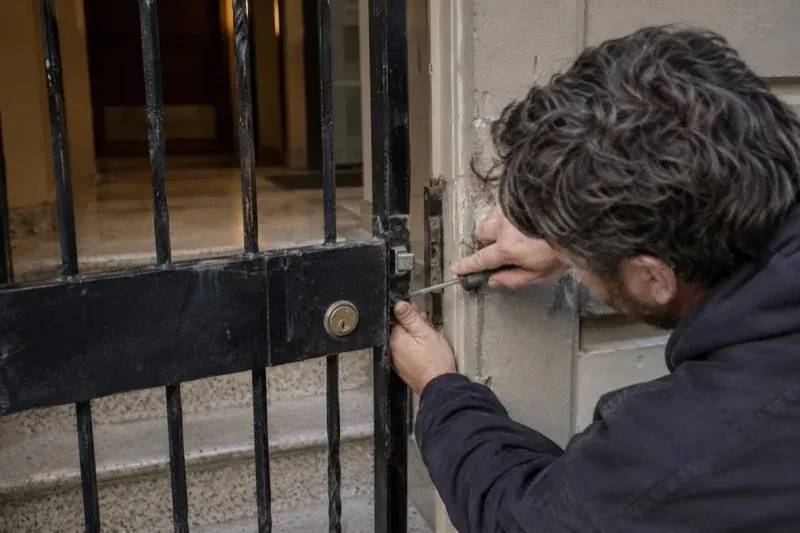
Someone pried at the gate latch overnight, and now the strike plate hangs by one screw and the cylinder spins loose in its housing.
In plain words
Gate & Building Entry Locks brings a property's outdoor gate hardware and its shared entrance into one visit, rather than treating the latch and the door's physical fit as separate problems. The locksmith reads how the gate or door actually moves, matches that to a lock built for outdoor use, and adjusts the closer and strike so the two agree. Where more than one household or unit relies on the same entry, the keying is planned around everyone who needs a working key, not just the person who placed the call.
How the visit goesThe driveway gate drags a groove into the gravel every time it swings, and the latch stopped catching weeks ago. Now it sits propped shut with a brick, waiting for anyone to walk through and forget to prop it back.
Gate & Building Entry Locks
How the visit goes
Testing the electronic side of the entry
Where a buzzer, keypad or electric strike is part of the entry, the check runs through each piece in turn: whether the intercom sends a signal at all, whether the strike receives power when it should, and, where the installed lock actually includes a keyed mechanical override, whether that key still turns smoothly on its own. Treating the electronic and mechanical sides as one system, rather than assuming the fault is wherever it was last blamed, is what keeps a working lock from being replaced when the actual issue was a loose wire or a dead transformer.
Correcting a frost-heaved or leaning post
When ground movement is the real cause, the fix goes to the post rather than the lock. Depending on what the post is set in, this can mean resetting it plumb, packing or replacing the base it sits in, or adding bracing so it stops drifting with each freeze-thaw cycle. The strike is then repositioned to match the corrected post, and the gate is cycled through several full closes to confirm the latch now meets it consistently, in place of chasing the same misalignment again after the next frost.
A seasonal habit worth keeping
A gate or shared entry that was serviced once benefits from a short look each season afterward, particularly heading into winter: cycling the gate to check the closer still settles it into the latch, glancing at the cylinder for the first signs of pitting, and confirming hinge or post hardware has not worked loose. Catching a stiff cylinder or a slow closer in the fall is a smaller job than reaching the same gate once it is genuinely frozen or has sagged further over a winter of neglect.
Gate & Building Entry Locks
In the van
Corrosion-resistant fasteners
Hinges, pivots and shims
Gate locks and latches
Plug follower and repinning kit
Gate and door closers
Gate & Building Entry Locks
What affects the quote
Time of year and weather on the day
A cylinder frozen solid or a closer stiffened by cold takes patient work before adjustment or replacement can even begin, so a call made during a cold snap is quoted with that extra time in mind.
Materials the gate or frame is built from
Wood, wrought iron, aluminum and vinyl gates each take fasteners and mounting approaches suited to that material, and matching the lock and closer correctly to the gate's construction is part of what the quote covers.
Whether the post or frame needs correction
When the underlying cause is a leaning post or a shifted frame rather than the lock itself, resetting, packing or bracing that structure is quoted as its own item alongside the lock work.
What to have ready
- Is the lock dragging, slamming, stuck, or simply not latching?
- Do you manage this property, or should someone else be involved in the decision?
- Has anyone moved out or left the building recently?
Gate & Building Entry Locks: questions
QuestionsSomeone tried to force our gate open. What happens now?
The locksmith first looks over the damage without disturbing it, noting pry marks, a bent strike or a cylinder that has been scored or spun, since that record is useful to have regardless of what else follows. Any hardware that was compromised is replaced rather than trusted, and a weak point the attempt exposed, such as an undersized hasp or a strike with too little bite, is addressed at the same time so the same approach would not work a second time.
What can be done about salt and corrosion on outdoor gate hardware?
Choosing corrosion-resistant fasteners and a cylinder rated for weather exposure at the outset avoids most of the problem, since plain steel fittings near a driveway or walkway take the brunt of de-icing salt over a winter. For hardware that already shows early corrosion, cleaning and a dry lubricant can extend its working life, while pitted or seized parts are better replaced than fought with season after season. A rinse of the hardware after a heavy salt application is a simple habit that helps as well.
What is a good option for a gate that delivery drivers or a maintenance crew need occasional access to?
A keypad or a lockbox with a rotating code works well there, since access can be shared without handing out a physical key that has to come back later. A weather-rated cylinder with a separate access key is another option if the property already runs on a keyed system. The locksmith can talk through how often the code should change and who on site should know it, so the gate stays convenient without staying open to everyone.
Related services
- Deadbolt InstallationThe old deadbolt has grown lazy.
- Lock Replacement & UpgradeThe house is fifteen years old and every exterior door still wears the light hardware the builder fitted: a short bolt, a thin strike held by two small screws, and a knob lock that never suited a street entrance.
- Vintage Mortise Lock ServiceThe key turns freely in the round cylinder on the door, all the way around and back, without the bolt shifting at all.