Commercial · Cundles
Commercial Rekeying in Cundles
The office has been reshuffled twice since the locks were last touched.
In plain words
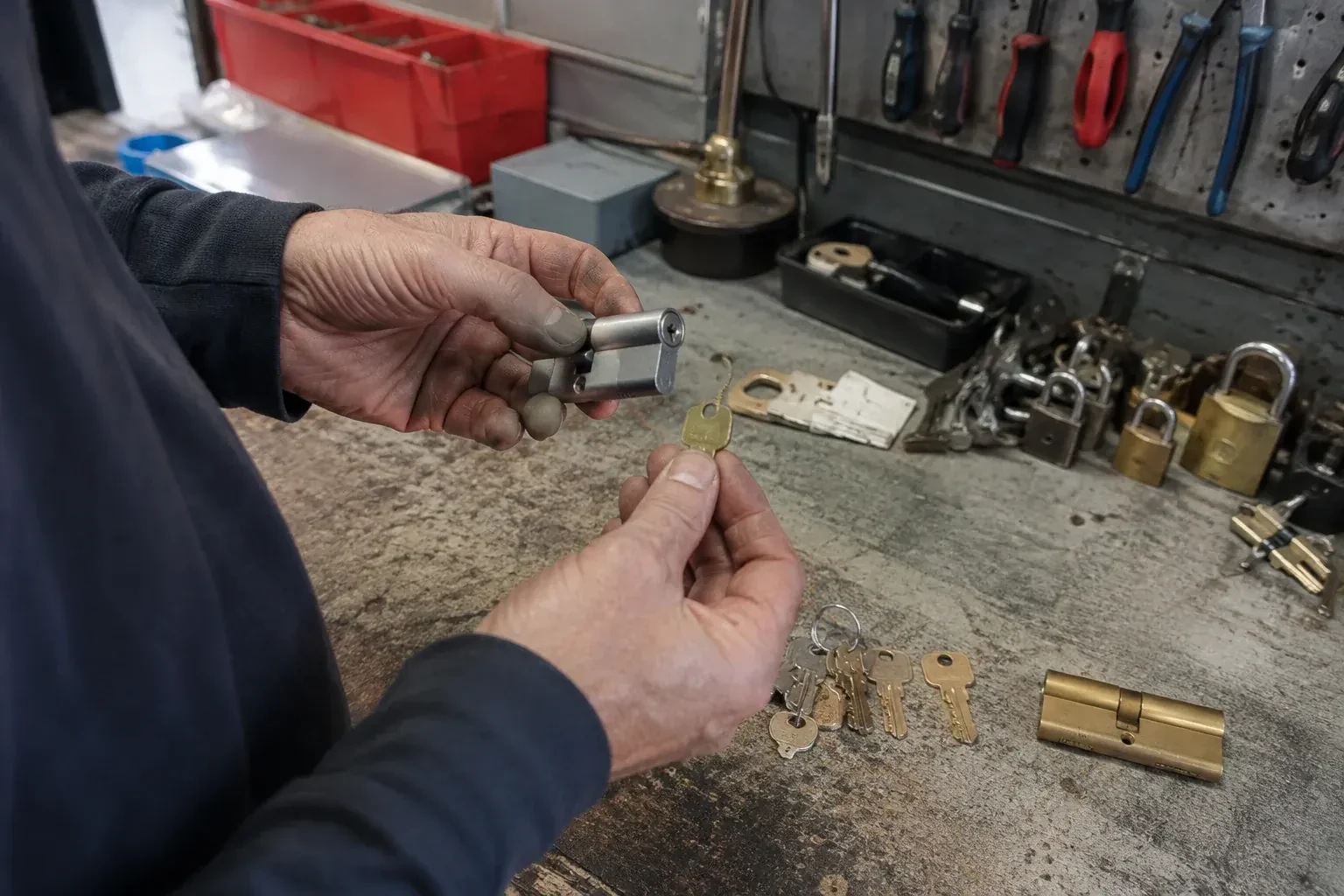
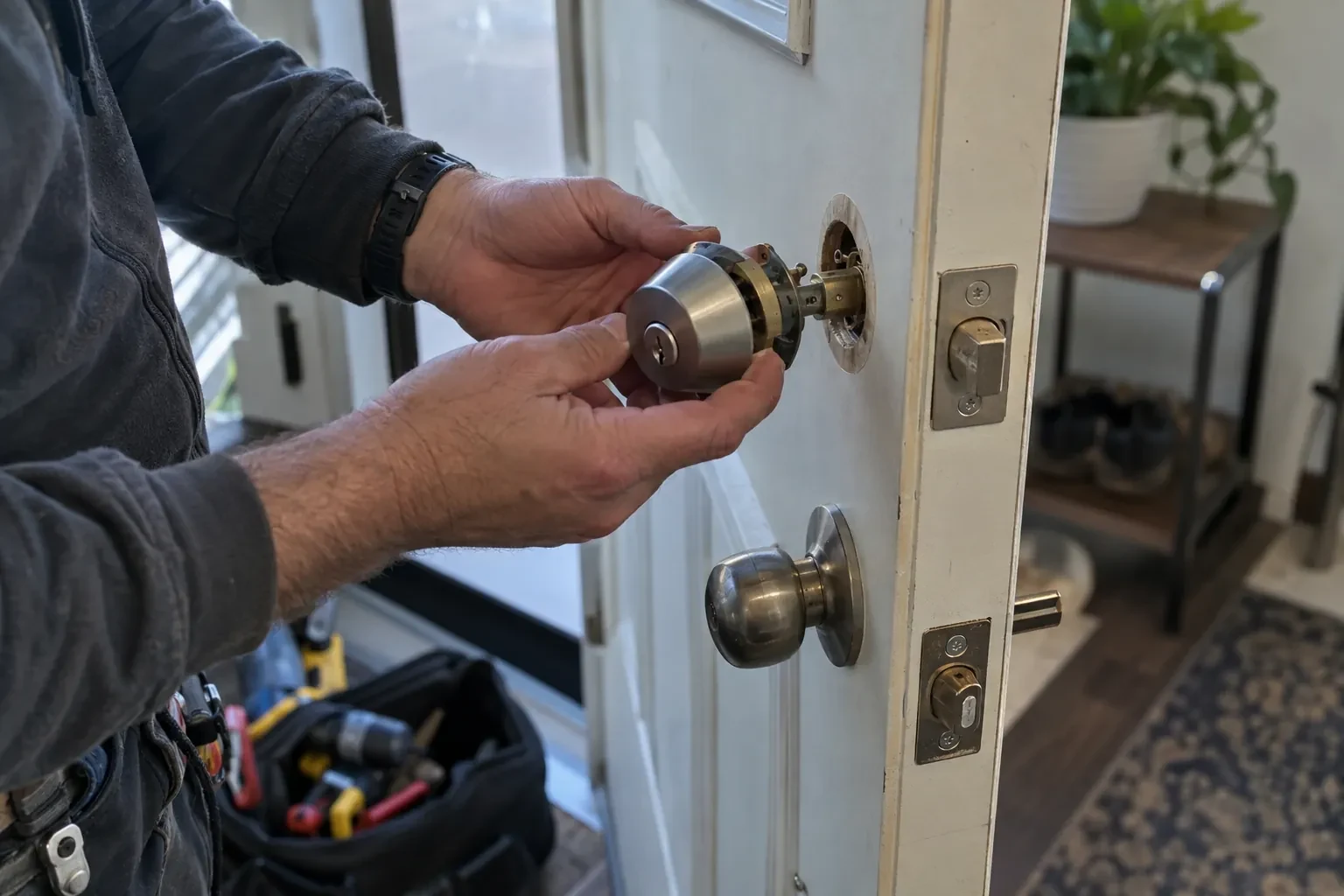
A commercial rekey is planned around the trading day. The locksmith agrees a window, often after close or before opening, and works door by door so the premises is never left without a locking entrance. Cylinders come out, are repinned at a bench in the van or on a counter, and go back in; interchangeable cores are simply swapped for freshly combinated ones. Each door is tried with both new and old keys before the next is started. New keys go to whoever opens up in the morning, and a written chart of doors and key groups stays with the manager.
How the visit goesThe office has been reshuffled twice since the locks were last touched. Reception can open the server room, the warehouse crew has a key to accounting, and the chart that once explained who could open what has not been seen since the move.
Commercial Rekeying
How the visit goes

Cores and restricted keys already on site
Some businesses already have more key control than they realize. Figure-eight shaped cores in the levers point to an interchangeable core system, which means a control key somewhere removes the core without unscrewing anything; finding out who holds that control key, or whether it left with a former manager, shapes the whole job. Keys with an unusual profile or a stamped number may belong to a restricted keyway whose blanks are only supplied against a signed letter of authorization, and the locksmith asks who the signatories are. Knowing what is already in place lets the new plan build on it rather than replace it, and flags any control that has quietly lapsed.
Retiring the old keys
The job is finished when the old keys are proven dead, not when the new ones work. At every rekeyed opening the locksmith tries a sample of the old keys, including the master if one existed, and confirms that each one enters the keyway and turns nothing. The collected old keys are then cut through with snips in front of the manager and can be handed back as scrap or taken away. Any door deliberately left on its original key is written on the chart in plain words so nobody assumes it changed. That last check is what turns a day of brass work into a genuine reset of who can open the business.
Storefront hardware ready for the salt
Cylinders on a street-facing door live a hard life: slush, salt spray from the sidewalk plough and a dozen freeze-thaw swings a winter. Each cylinder handled during the rekey is cleaned and dressed with the lubricant approved for that model, a dry graphite, PTFE or specified liquid lubricant applied sparingly, since too much graphite can gum a cylinder just as oil traps grit. Keep it that way with a puff of the same lubricant each autumn and a wipe of the key before it goes in on a slushy morning. A set screw snugged, a cam aligned and a bolt that throws fully are part of the handover, so the rekeyed door also locks more cleanly than it did before.
Commercial Rekeying
In the van
Commercial pin kit
Interchangeable cores and control key
Standard and restricted key blanks
Master pins
Rekeyable padlocks
Commercial Rekeying
What affects the quote
Cylinders that need replacing
Where a worn, corroded or low-grade cylinder is better replaced than repinned, the new part is added for that door alone, and the locksmith points it out before the work begins.
Documentation and register
A keying chart, a key register and stamped codes on every key are part of a proper commercial rekey, and the quote names the paperwork so it is never skipped.
Doors out of alignment
A door whose cam, strike or closer needs adjusting so the freshly rekeyed cylinder throws the bolt fully is corrected during the visit, and that adjustment is a separate item.
What to have ready
- When is the premises quiet or empty enough for the work?
- Which doors, if any, belong to the landlord or a shared corridor?
- Can you gather every existing key so they can be read on site?
Commercial Rekeying: questions
QuestionsWhat is the difference between rekeying a business and replacing its locks?
Rekeying keeps every lock on the door and changes only the pins inside the cylinder, so a new key works and the old ones stop. Replacing swaps the hardware itself. Commercial cylinders are made to be repinned many times, so rekeying suits any lock in sound condition and leaves the levers, trim and door untouched. Replacement is chosen door by door for cylinders that are worn, corroded or too light for what they protect.
How often should a business change its keys as a matter of routine?
There is no fixed interval. Rekey on events rather than on a calendar: a key not returned, a lease change, a break-in, a renovation crew finished, or a key count that no longer matches the register. Businesses with a good register and a restricted keyway often go years between rekeys because nothing prompts one. A yearly check of the register against the keys on the hook is the habit that tells you when the time has come.
What condition does a lock need to be in to be rekeyed?
It needs a plug that rotates without catching, pins that return under their springs, and a face free of heavy corrosion or cracks. Most commercial cylinders in daily use pass easily. Ones that are stiff, gritty or green with salt bloom can sometimes be cleaned and repinned, and the locksmith will say when a replacement for that door is the better value; the rest of the doors are rekeyed regardless.
Related services
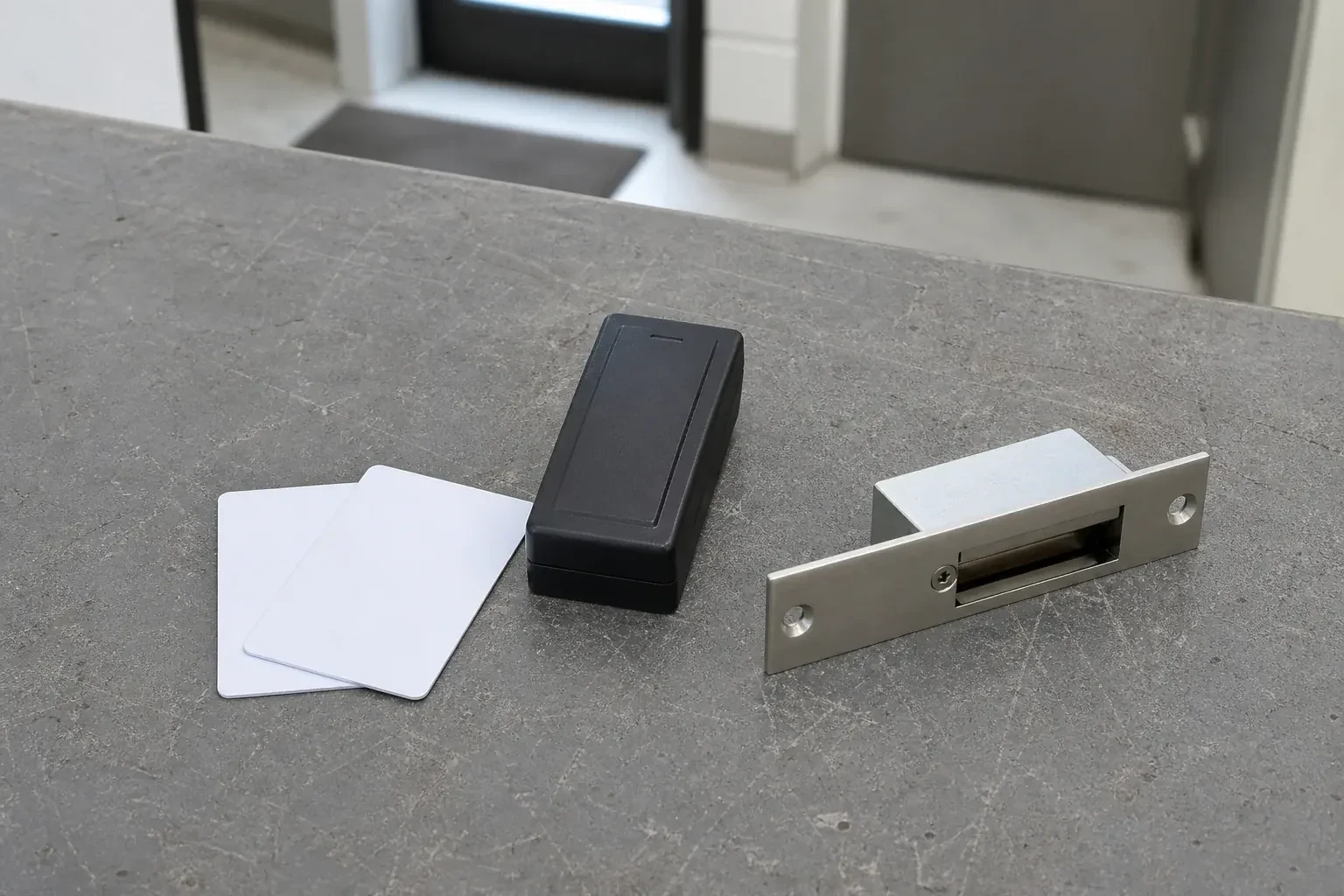
- Access Control InstallationHead office wants a record of who opens the branch and when, tied to an actual name rather than a shared code scrawled on a sticky note taped under the till.
- Panic & Exit HardwareThe crossbar on the loading-dock door barely returns anymore.
- Commercial-Grade Lock ReplacementThe kitchen delivery door gets shouldered open more than a hundred times a shift, and lately the latch slips past the strike plate instead of catching it on the first push.