Car keys · Cundles
Transponder Key Programming in Cundles
The remote fob has gone silent, the doors won't unlock with a button press, and the little emergency blade tucked inside it has not been used since the day the car was bought.
In plain words
When every key for a vehicle is genuinely gone, there is nothing left to vouch for a new one, so the visit starts by re-establishing secure access to the immobilizer's own module, sometimes through the vehicle's manufacturer network. Only once that access is confirmed can a fresh key be cut and its chip written in. It takes longer than adding a spare with an existing key on hand, but it follows the same underlying logic and finishes with the same test: an engine that starts on the new key alone.
How the visit goesThe new key slides into the ignition and turns exactly the way the old one did, but the engine only cranks. A dashboard light blinks near the fuel gauge, and no amount of turning the key gets the car past that cranking sound.
Transponder Key Programming
How the visit goes
Looking at the key itself
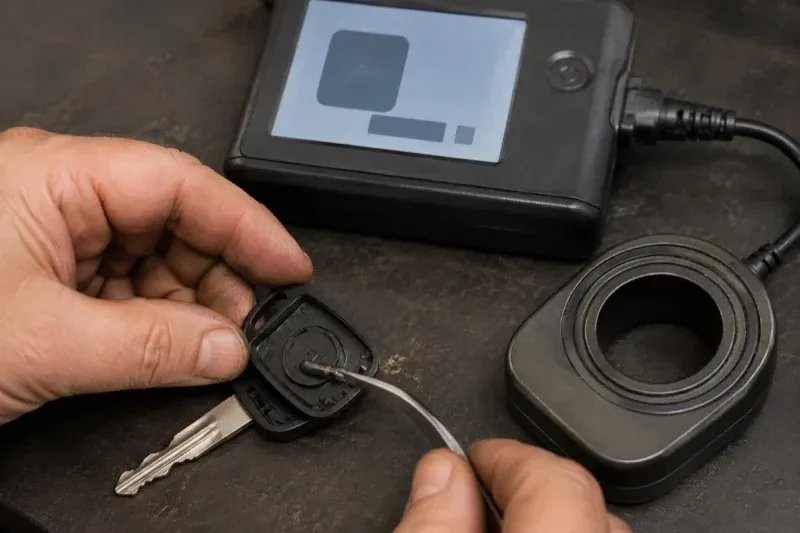
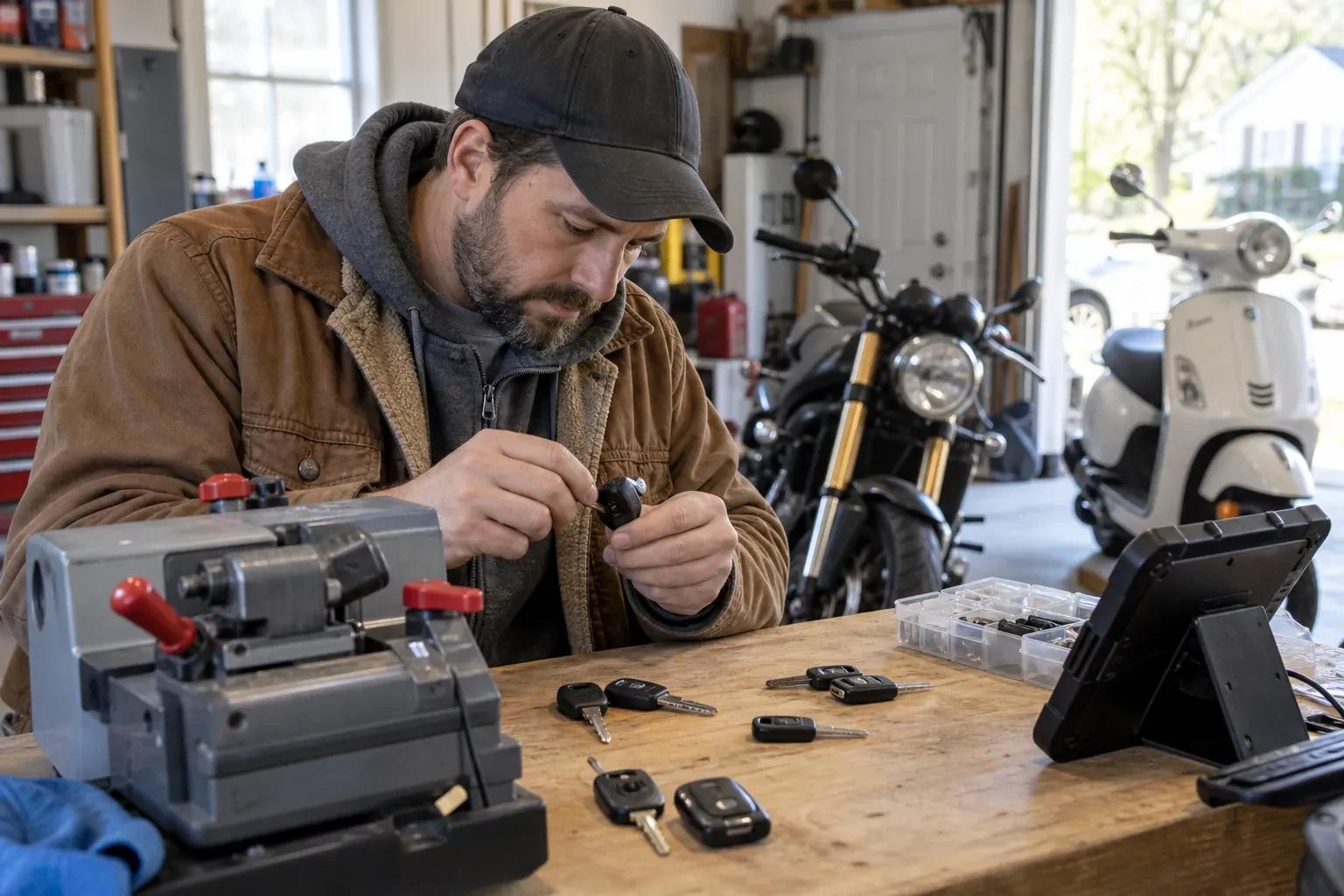
The physical key gets its own inspection. A blade is checked against the lock for wear, a remote-head or proximity fob is opened to check its battery and contacts, and any chip visible in the key head is checked for cracks or separation from the blade. A key that was cut at a counter kiosk but never programmed is common enough to check for specifically: the metal fits the lock perfectly, and the confusion is understandable when the same piece of plastic looks complete either way.
Starting over when every key is gone
All-keys-lost work follows a different path, because there is no working key left to prove the vehicle's trust to a new one. The locksmith first re-establishes secure access to the immobilizer's own module, sometimes through the vehicle's manufacturer network, before a fresh key list can be written at all. Once that access is confirmed, the new key or keys are added the same way any other key would be, and the process finishes with the same start-up test as a routine replacement.
A spare that already exists, not one for later
A spare key made before it is needed sits in a drawer doing nothing until the day the only other key is lost, and on that day it is worth more than any amount of good intention would have been. Households that arrange this while it is convenient rarely regret it, and the visit that adds a driver's key or a genuine spare is no more involved than the one that replaces something already missing. The difference is only in when it happens.
Transponder Key Programming
In the van
OBD-II key programmer
Replacement remote-head fob
Emergency insert blade
Frequency test reader
Diagnostic laptop or tablet
Transponder Key Programming
What affects the quote
Aftermarket alarms or remote starters already installed
A vehicle with an aftermarket alarm or remote starter wired into its ignition circuits may need extra time to confirm how that system interacts with the factory immobilizer before a new key is programmed.
Vehicle make, model and year
The chip family, the immobilizer generation, and how reachable the vehicle's key list is all follow from the exact vehicle, so identifying it precisely early on shapes both the blank needed and how much of the visit is straightforward programming versus a more involved security session.
Age and availability of the correct blank or chip
Older or less common vehicles sometimes use a blank or chip family that takes longer to source, particularly for a model that has been out of production for some years, which affects how the visit is scheduled.
What to have ready
- Is the dashboard security light flashing or staying lit?
- Where is the vehicle parked right now?
- Is the key a basic blade, a remote-head, or push-button proximity?
Transponder Key Programming: questions
QuestionsCan I have a spare key made before I actually need one?
Yes, and on many vehicles it is one of the more straightforward visits in this service, since a working key already on hand can authorize the new one; a few models instead call for two working keys or a different programming route. The spare is cut, its chip is written in, and both keys are tested before the locksmith leaves, so the spare is proven rather than simply handed over untested.
I just bought a used vehicle with one key. What should I do first?
Arrange a second key while the first one is still working, since it costs far less time and trouble than doing the same thing after that single key is lost or damaged. It is also a reasonable moment to confirm exactly how many keys the vehicle's system currently recognizes, especially if the previous owner cannot say for certain.
Do I need paperwork from the dealer, or a code from them?
Not usually. Programming equipment reads and writes the vehicle's key list directly in most cases, without needing anything from the dealer. Many recent vehicles gate that access behind a manufacturer-level security session instead, which the locksmith handles as part of the visit rather than asking the owner to obtain anything in advance.
Related services
- Car Key ReplacementYou bought the car privately and it came with a single key on a shoelace.
- Spare Car Key DuplicationOne key opens the car, starts the car, and rides in one pocket every day.
- Key Fob ProgrammingEvery fob for the car disappeared at once inside a bag that was never recovered, and the vehicle now sits in the driveway with no way in and no way to start it.